Hybridizer by M. Elaine Bessette, R., 1996
Blossoming: late May, early June
| The Chapel of Brother André |
![]() The Chapel of Brother André Photo: Nathalie Dumas |
|
The simple building measured a mere 4.5 metres (15 feet) by 5.5 metres (18 feet). Two over-sized walnut doors occupied almost the entire façade and opened up for Masses, so people kneeling on the grass outside the chapel could see the altar. A portable communion rail was set up so worshippers could receive Holy Communion.
It soon became clear that more space was needed.
Once Saint Brother André’s renown grew and word of miraculous healing spread abroad, throngs of pilgrims began to flock to the site. In 1908, the chapel was enlarged for the first time and a stove was added so it could be used year-round. The nave was again enlarged in 1910, at which time a steeple and a room for Brother André were also added. This is the chapel that stands today.
|
![]() |
| Chapel's blessing in 1904 Photo: Les Archives de l'Oratoire Saint-Joseph |
| The Interior |
|
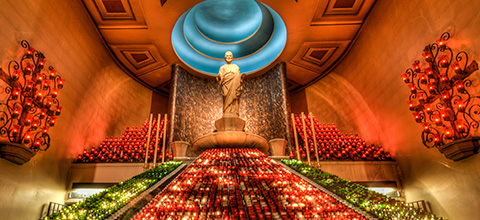
The chapel interior is furnished with a wooden altar in front of an antique-style carved reredos, sculpted by Brother Abundius during the winter of 1906. Natural sunlight from a thin clerestory highlights the altar and the pressed tin walls and ceiling. The painted plaster statues were done by the artist T. Carli. Crutches, canes, and plaques are attached to the wall as testaments to the graces and healing pilgrims received as a result of their visits to Saint Brother André.
|
![]() The Altar Photo: Nathalie Dumas |
| Brother André's Room |
|
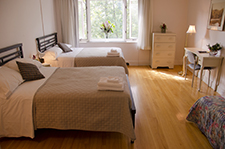
In a loft above the entrance in a kind of gallery is a little room where Saint Brother André lived. The room and its original furnishings are remarkably simple: a bed, a small table with two chairs, a basin, a wardrobe and a little gas stove. Sometimes Saint Brother André would squeezed in an extra cot to accomodate a sick person or an overnight pilgrim. Thanks to an interior window Saint Brother André could look straight down a few feet to the altar and his beloved Saint Joseph. The simple and austere arrangement gives the viewer a feel for the lifestyle and spirit of poverty that motivated the founder of the Oratory. |
![]() Photo: Paul Simon |


modif.jpg)