A Lying-in-State for Brother André
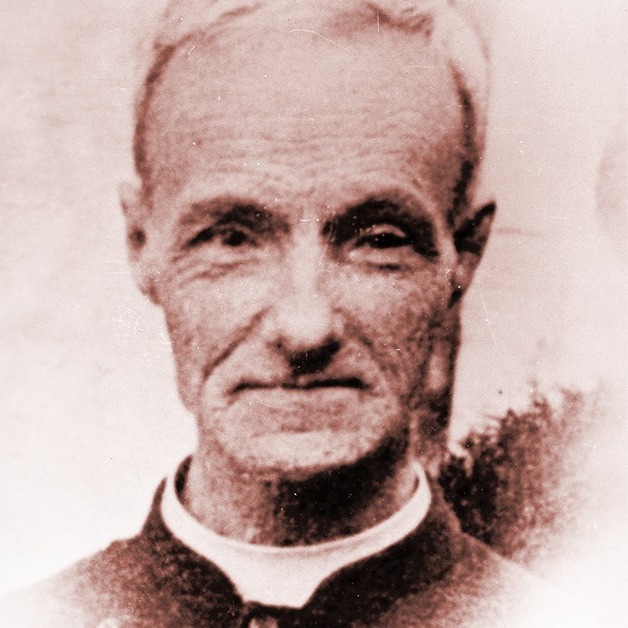
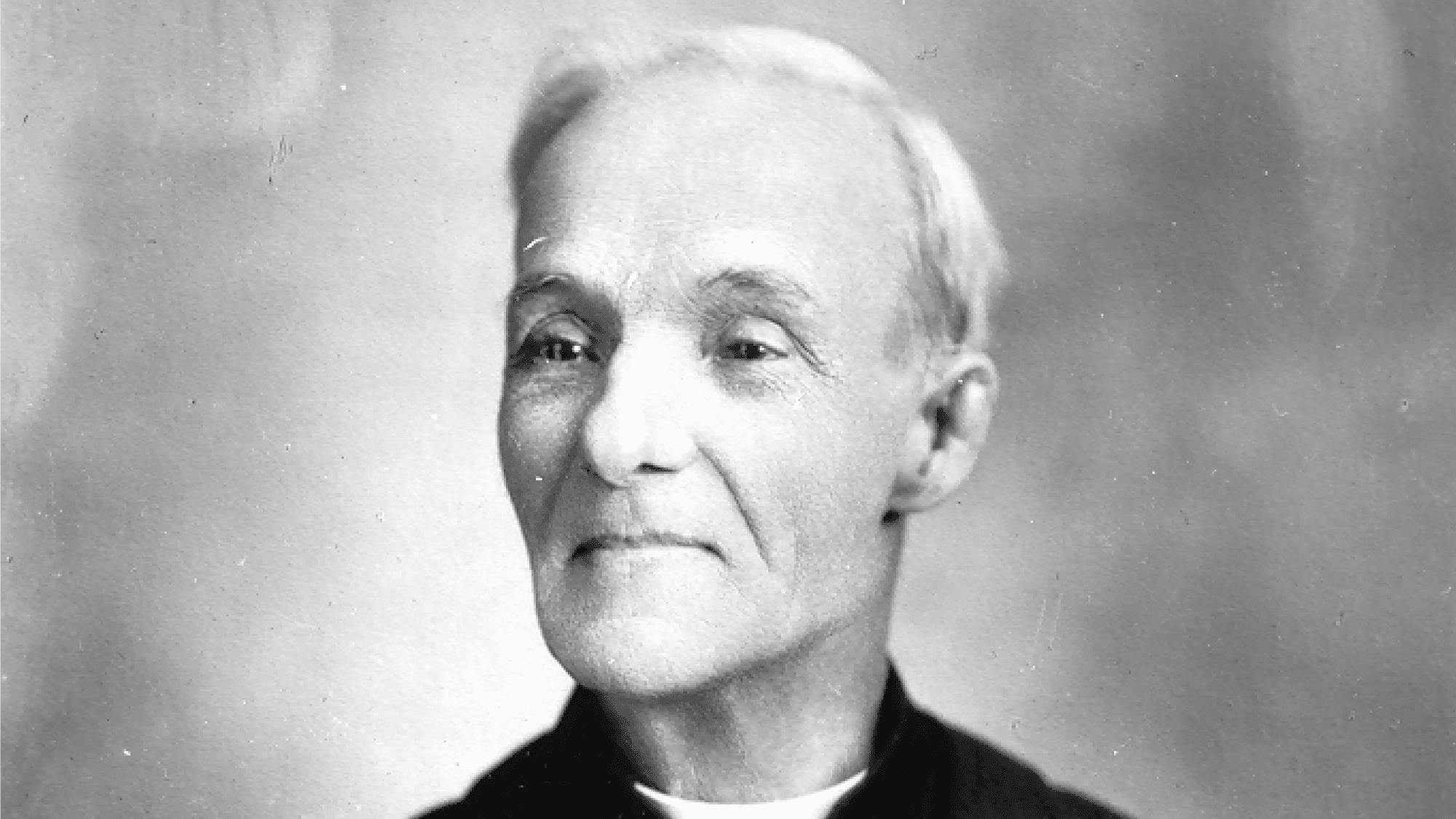
Brother André died 89 years ago, on the morning of January 6, 1937. His death deeply marked history, notably because of the spectacular influx of people who came to pay him their final respects. To accommodate the grieving pilgrims, a five-day lying-in-state proved necessary.
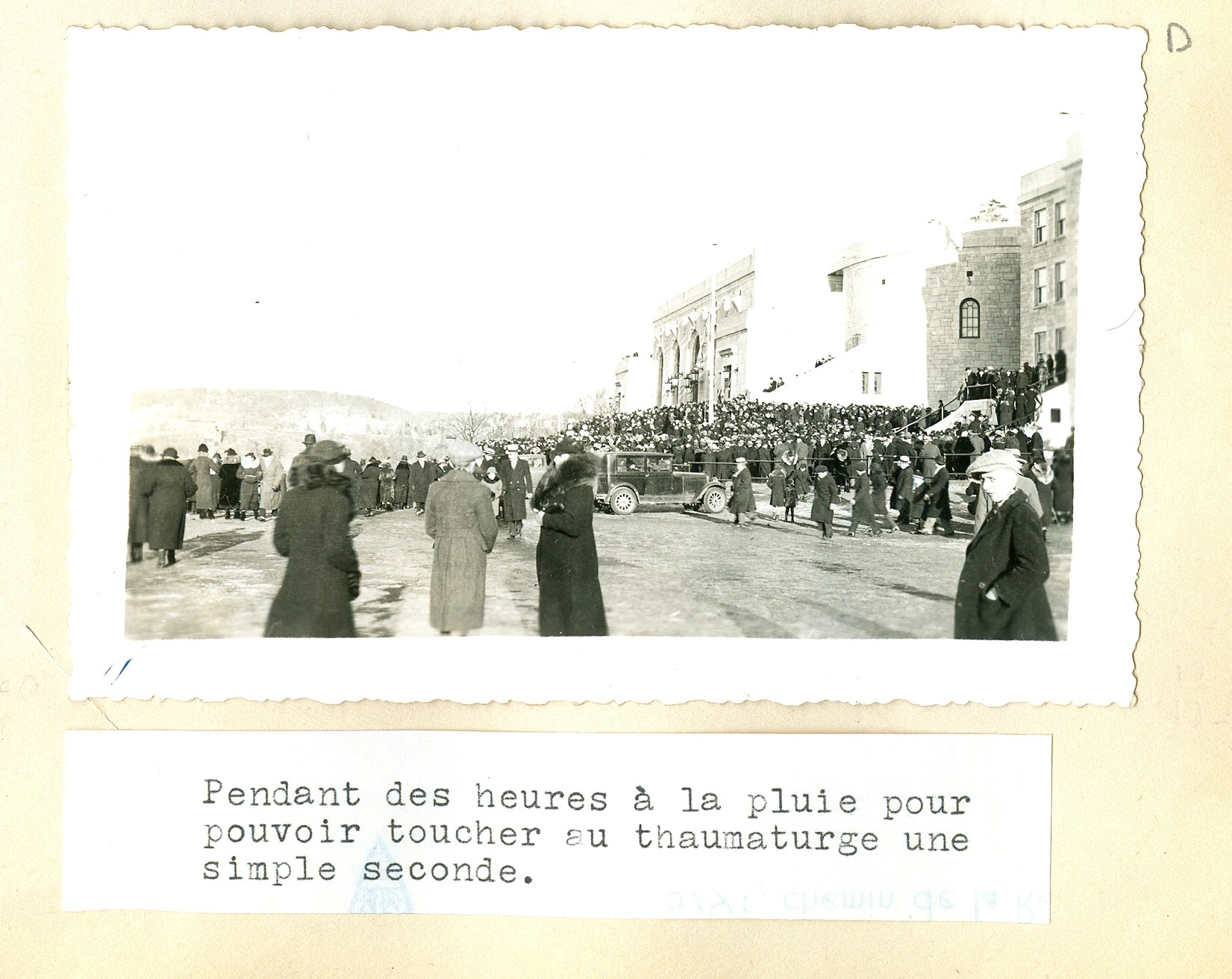
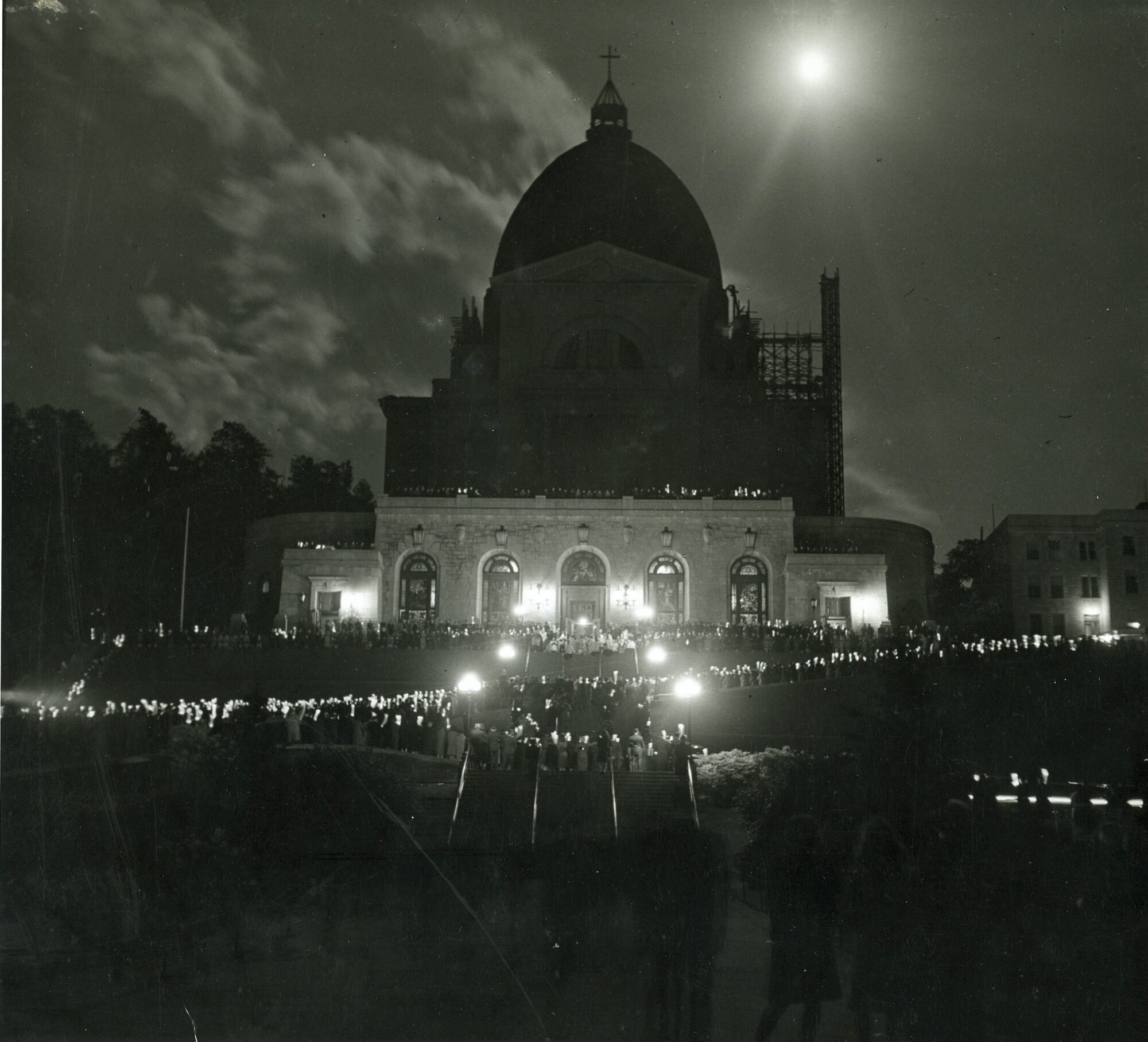
Album of Brother Denis Leblanc, C.S.C., January 1937. OSJ Archives, 12-24
A Form of Farewell
The practice of the lying-in-state is ancient and has been attested since the 15th century. The “chapel” can be any space temporarily arranged to receive the deceased. The body is kept there, usually in an open casket, so that family members, friends, and neighbors may keep vigil.
The term “ardent” comes from the large number of candles that are lit to adequately illuminate the body of the deceased. One can easily imagine that before the advent of electricity, concentrating so much light in a single place must have made a powerful impression.
An Impressive Crowd
News of Brother André’s death in the early hours of the morning on January 6 spread very quickly. Taking advantage of the relative calm, a death mask was promptly made and the heart was removed. By morning, Saint-Laurent Hospital, where Brother André had been admitted a few days earlier, was besieged by a crowd of people who filed silently through the room of the deceased. The body was moved only at the end of the day, heading toward the Crypt Church of the Oratory. Several hundred people were already there. (1)
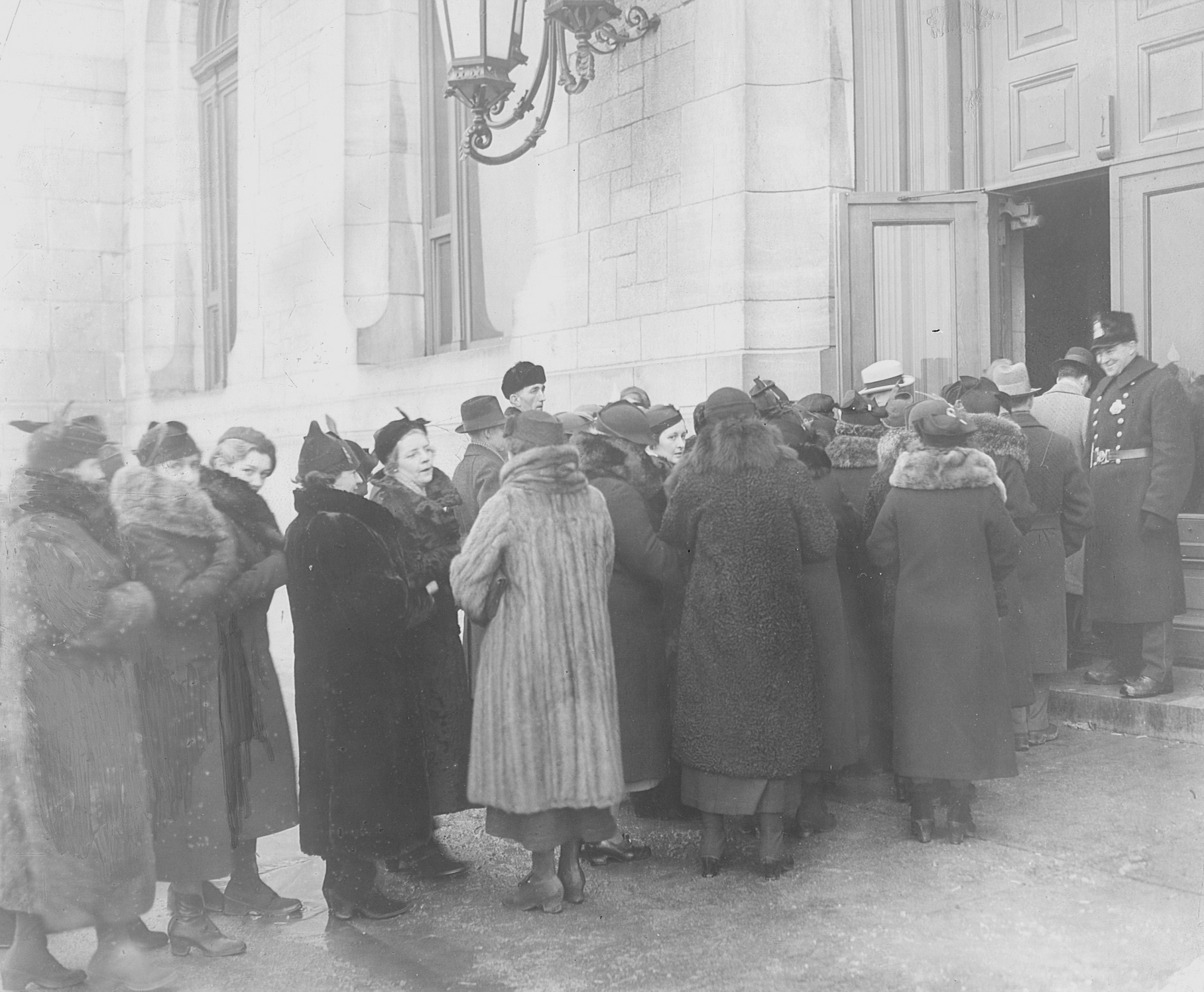
Pilgrims lining up in front of the Crypt Church door. January 1937. Photographer unidentified. OSJ Archives, 12-5
Between January 7 and 13, hundreds of thousands of people from all walks of life and from various places passed before Brother André’s coffin. They wanted to touch his hands, his feet; they tried to place a medal, a rosary, or a crucifix on his body. But no one could linger before the remains:
“They cannot stay long beside him, for thousands of others are waiting their turn. A glance, a brief prayer, a supplication, and that is all. One must move on, follow the shifting flow, image of life, image of death…” (2)
Newspapers from all across Quebec, such as La Patrie, Le Soleil, La Tribune, and Le Nouvelliste, reported on the immense crowds pressing into the chapel of rest and the many difficulties people faced in reaching the crypt. The weather was particularly dreadful: freezing rain, relentless winds, and bitter cold. Much was written about the roads being impassable. Despite this, La Patrie headlined on the first day of the lying-in-state that, “according to estimates,” more than one million people would pass before Brother André over the course of two days. (3)
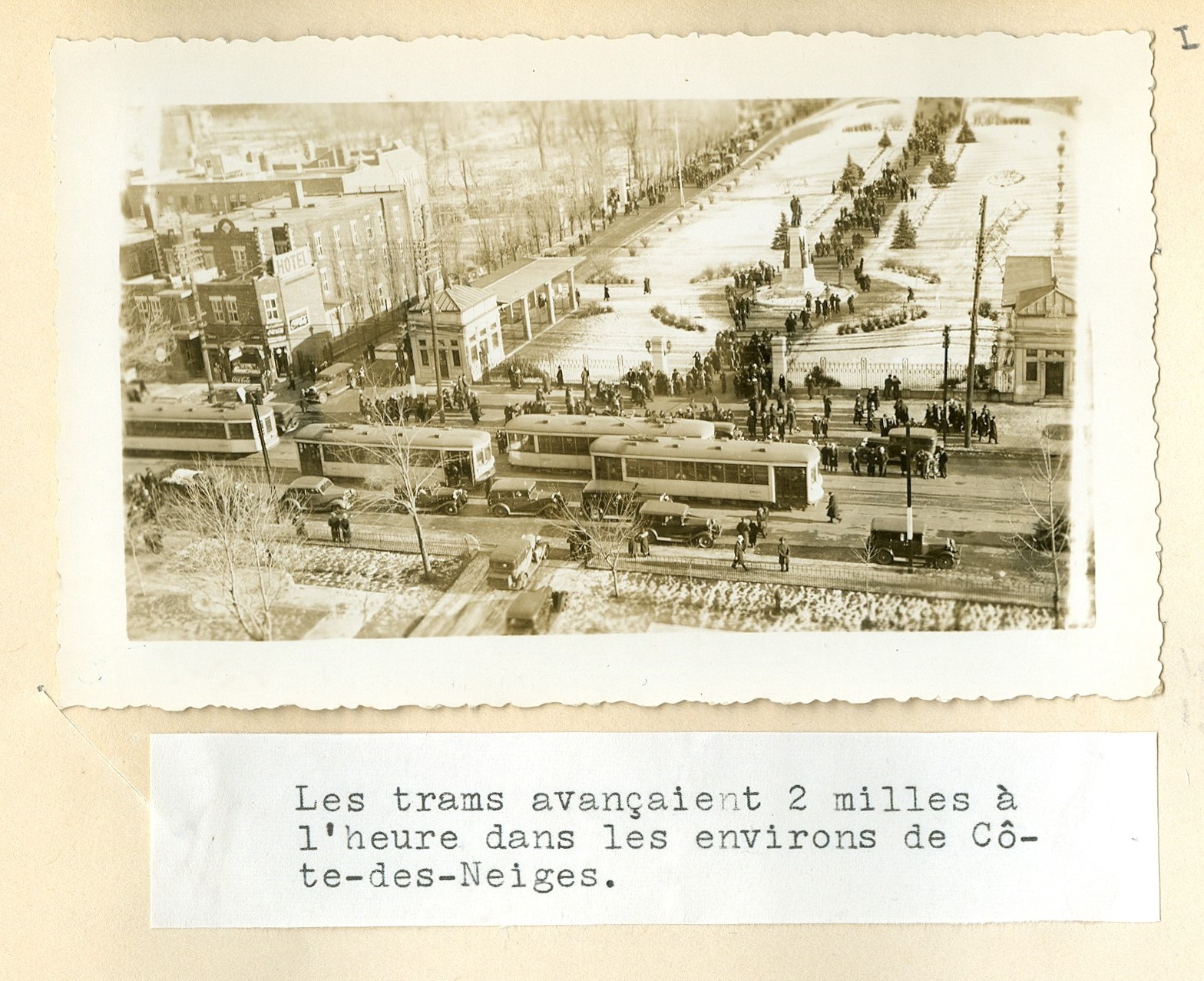
Album of Brother Denis Leblanc, C.S.C., January 1937. OSJ Archives, 12-24
On January 9, Brother André’s remains were taken to the Basilica-Cathedral of Saint-Jacques, known since 1955 as Mary, Queen of the World. Msgr. Georges Gauthier, coadjutor archbishop, celebrated a first solemn Mass there for the deceased. The body was then returned to Collège Notre-Dame, where those who had known him gathered one last time: his fellow brothers, the teachers and the Sisters of the Holy Family, and the students. Early in the evening, the hearse made its way back up to the crypt, and Brother André was once again laid out for the crowds for another three days.
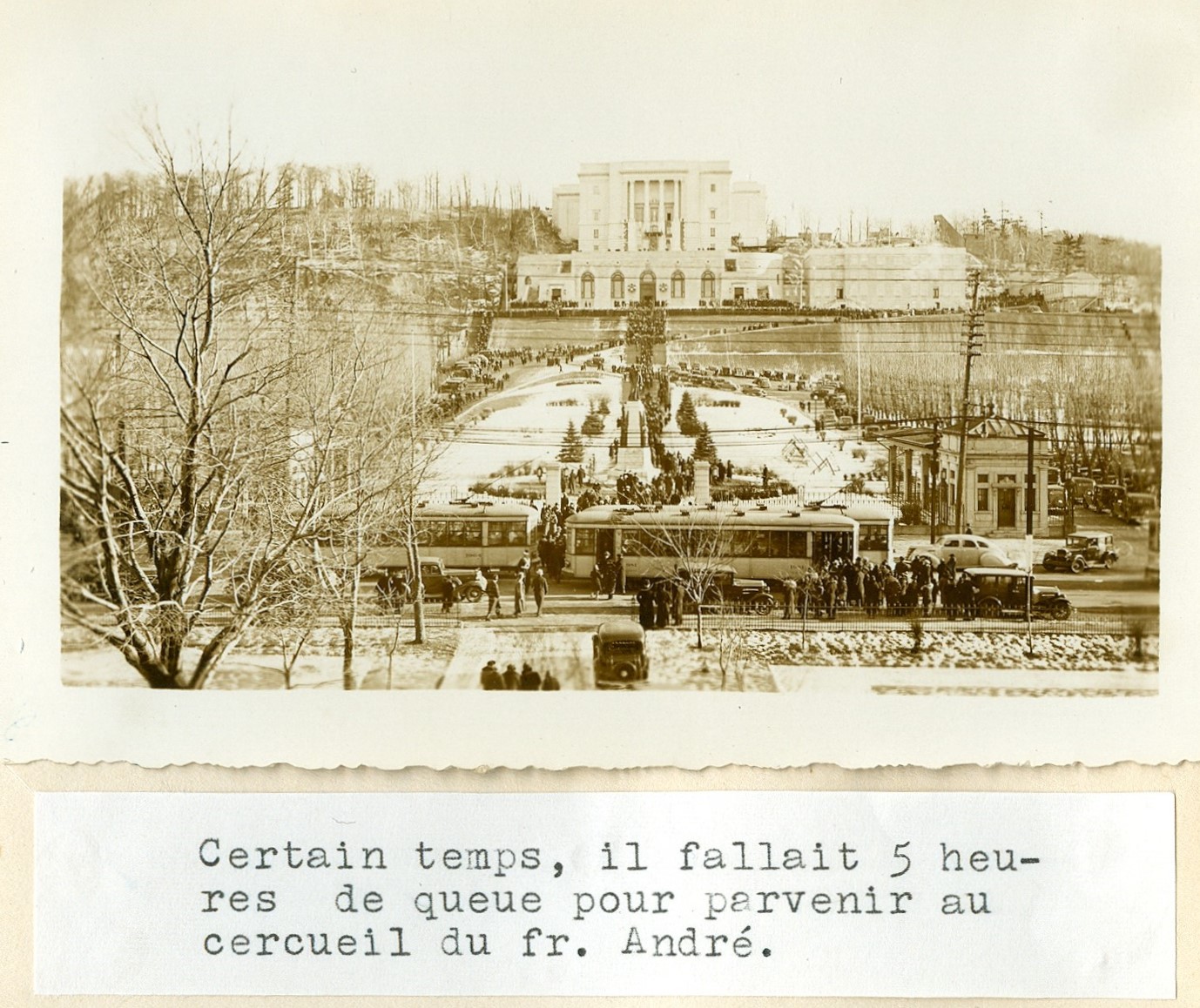
Album of Brother Denis Leblanc, C.S.C., January 1937. OSJ Archives, 12-24
Testimonies from Fellow Brothers
Several members of the community wrote tributes to Brother André in the Annales de Saint-Joseph in the weeks following his death.
Brother Placide Vermandere, C.S.C., was a privileged witness to the events that took place during the lying-in-state. He authored two articles published in March and April 1937.
Father Henri-Paul Bergeron, C.S.C., the first biographer of Brother André’s life, published texts on the memory of Brother André among the faithful of the Oratory, as well as on his trust and charity.
A close friend who knew Brother André well, Father Émile Deguire, C.S.C., offered readers a piece on his humility.
Finally, Brother Daniel Leblanc, C.S.C., a 25-year-old member of the Congregation of Holy Cross, captured a dozen candid photographs of the pilgrims present between January 7 and 13. Taking on the role of a photojournalist, Brother Daniel accompanied his images with remarks on the pilgrims’ patience as they waited in the endless line, the mishap of a physician and his automobile, and, of course, the weather.
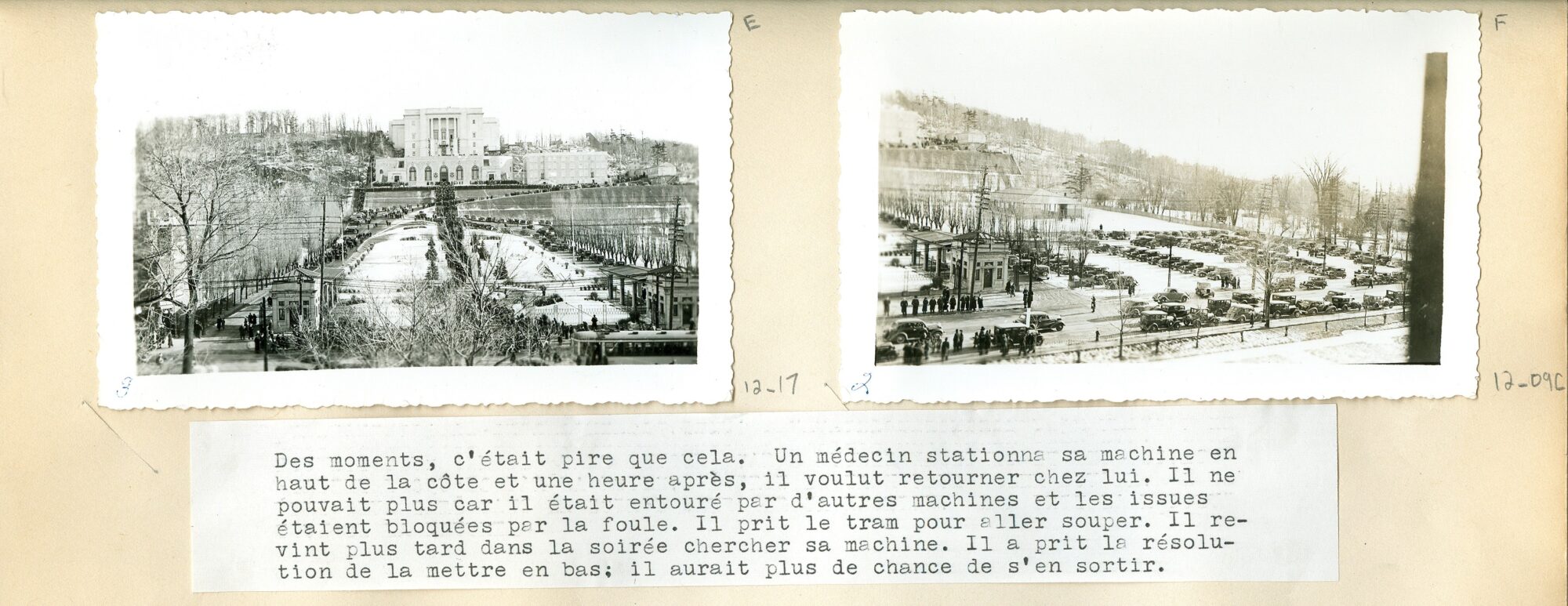
Album of Brother Denis Leblanc, C.S.C., January 1937. OSJ Archives, 12-24
(1) Excision is the operation that involves removing the heart from the body in order to preserve it. Brother Placide, C.S.C., “Le triomphe,” Annales de Saint-Joseph, March 1937, p. 103.
(2) Ibid., Brother Placide, C.S.C., p. 105.
(3) La Patrie, January 7, 1937, BAnQ Collections. Consulted on January 8, 2026. DOI: https://numerique.banq.qc.ca/patrimoine/details/52327/4325294