Christmas is hope that springs forth
In his 2015 Christmas message, Pope Francis reminded us that: “Where God is born, hope is born; and where hope is born, people regain their dignity. Where God is born, peace is born” (cf. Angelus, December 14, 2015). In a world marked by violence, war, uncertainty, and stress, this message, filled with faith and humility, remains relevant. Thus, at each Christmas season, we reflect on the unconditional love of our God, who comes to meet us in order to renew the ultimate meaning of our hope, which never disappoints.
One of the most inspiring texts for exploring the enigma of Christmas is the prologue of Saint John. The author of this Gospel begins his discourse thus: “In the beginning was the Word, and the Word was with God, and the Word was God.” “He was with God in the beginning. Through him all things were made; without him nothing was made that has been made.” (John 1:1-3). By reflecting on the prologue of Saint John, it would not be a trivial matter to grasp the theological and cosmological dimension of his thought.
In Greek philosophy, logos refers to intelligence, reason, or rational discourse. It is what allows us to think coherently, to explain the world, and to communicate. For Heraclitus, logos is the hidden order of the world, a universal law that organizes the cosmos (cf. Sextus Empiricus, Against Mathematics, VII, 132). For Plato, logos is rational thought, a well-structured discourse oriented toward truth (cf. Phaedrus, 259-266). Now, Jesus himself will say that he is the Way, the Truth and the Life (Jn 14:6). Without wishing to contradict these philosophical assertions, the Hebrew tradition enriches understanding from a Christian perspective with the verb dabar, the Word of God. Consequently, logos, in the root of the Greek verb dabar, represents a density of meaning and limitless richness. At the root of this same verb dabar, the hidden idea is that there exists in God an energy that wants to manifest itself, to spring forth.
God, considering our own original sin which distorted the divine nature of humankind, has revealed himself to us. “In the past God spoke to our ancestors through the prophets at many times and in various ways, but in these last days he has spoken to us by his Son, whom he appointed heir of all things, and through whom also he made the universe.” (Hebrews 1:1-2). Nathan’s prophecy specifies precisely that Yahweh will build a house for David (cf. 1 Samuel 7:12-24). David’s reign will be an eternal one. From this lineage of David is born the king of glory, coming from Bethlehem; he will be called “Mighty God, Everlasting Father, Prince of Peace” (Isaiah 9:5). Emmanuel, that is, God with us (Isaiah 7:14), and the Spirit of Yahweh will rest upon him with his gifts, and a reign of justice and peace will be established (Isaiah 9:6).
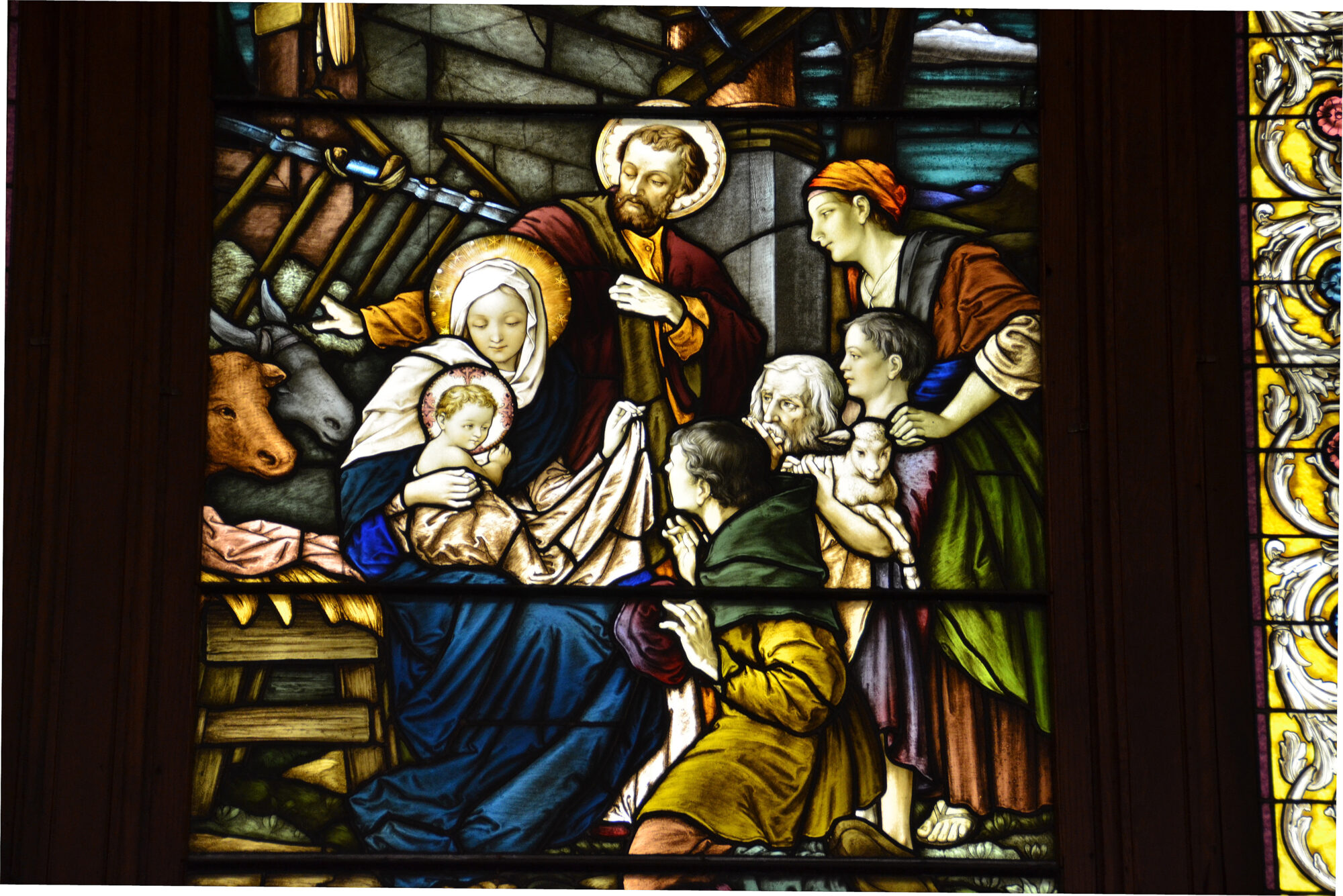
Saint John affirms: “The Word became flesh and made his dwelling among us. We have seen his glory, the glory of the one and only Son, who came from the Father, full of grace and truth.” (Jn 1:14). This is the heart of Christmas.
The Spring of Hope
To say that Christmas is “the spring of hope” is to place this feast at the heart of our Christian faith. It is a birth that we celebrate in faith, trust, and hope that overcomes uncertainty and alarmism. The Second Vatican Council reminds us that, “by his incarnation, the Son of God was united in a certain way to every man” (cf. Gaudium et Spes, n. 22). He worked with human hands, he thought with a human mind, he acted with a human will, he loved with a human heart. Born of the Virgin Mary, he truly became one of us, like us in every way, except for sin.
Christmas helps us understand that God comes to dwell among us, that He chooses to be at our side, sharing our joys and our sorrows. In our world torn apart by armed conflicts that continue to disfigure humanity, celebrating Christmas means celebrating hope, joy, and peace. The prophet Zephaniah strengthens our hope by saying: “ The Lord your God is with you, the Mighty Warrior who saves.” (Zeph 3:16–17). “God protects His people” (Zephaniah 3:16). At Christmas, we renew our faith and our hope in this protective God who comes into our weakness in order to divinize us. Thus, when faced with the circumstances of our daily lives, with waves and contrary winds, we must not give up.
At Christmas, it is this prophetic birth that the universal Church celebrates, the birth of the shoot that springs from the stump of Jesse, the father of David, a branch that grows from his roots (Is 11:1). The feast of Christmas is therefore the wellspring of Christian hope. It marks the incarnation of the Son of God; it is the perfect revelation of God in His heavenly reign; it is the light that shines in Bethlehem and becomes, for the whole world, a tradition of joy, beauty, and hope.
To each and every one of you, a blessed Advent and a joyful festive season. May our hope be complete!