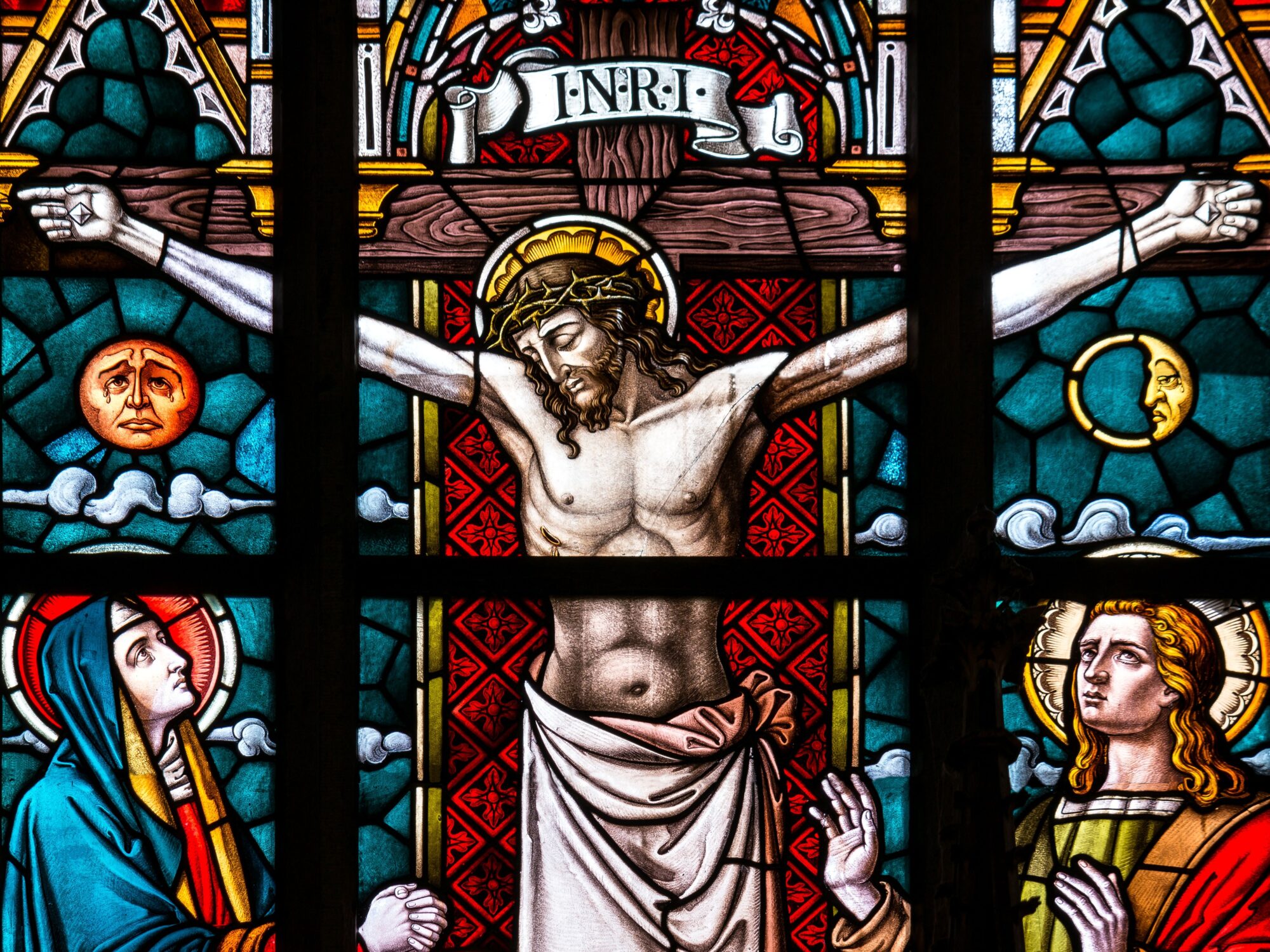
Our Lady of Sorrows
One of the most influential philosophers in Western thought, Friedrich Nietzsche, left us this striking reflection on suffering: “In solitude, the solitary man gnaws at his own heart; in the multitude, it is the crowd that gnaws at it. So choose!” Although this statement is foreign to the Christian theological perspective, it helps shed light on two dimensions of human suffering: that which is experienced in the intimacy of the heart, and that which is intensified by the presence and actions of others.
At the foot of the Cross, Mary knows precisely this twofold dimension of suffering. In her heart, she bears the pain of seeing her Son handed over to death, while outwardly remaining in the midst of a hostile crowd that watches, condemns, and takes part in the drama of the Crucified One. Yet Mary flees neither suffering nor the presence of others: she remains in love.
Saint John writes: “Near the cross of Jesus stood his mother and his mother’s sister, Mary the wife of Clopas […]” (Jn 19:25–27). Mary does not shrink from the scandal of the Cross; she remains standing beside the One whom she received from God and whom she now sees handed over to human violence. She is neither a passive spectator nor a woman overcome by despair, but the Mother who, in faith and love, participates in the mystery of the Passion.
This suffering does not suddenly appear at Calvary. It had already been foretold at the presentation of Jesus in the Temple by Simeon: “And you yourself a sword will pierce” (Lk 2:35). Simeon’s prophecy thus reveals that Mary’s “yes” concerns not only the Annunciation, but gradually opens her to the entire mystery of her mission, all the way to the Cross. At the Annunciation, she receives in faith the Word who becomes flesh; through Simeon’s words, she already receives the announcement of the suffering that will accompany the mission of her Son.
The Seven Sorrows of the Virgin Mary
Christian tradition contemplates Mary’s participation in the mystery of the Passion through the seven sorrows: the prophecy of Simeon, the flight into Egypt, the loss of Jesus in the Temple, the encounter with Jesus as He carries His Cross, her presence at Calvary, the receiving of His body after He is taken down from the Cross, and her accompanying Him to the tomb.
These sorrows are not simply a succession of trials; they trace the journey of a faith that remains faithful when God’s promises seem obscured by silence, violence, and death.
Saint Alphonsus de Liguori expresses this reality by stating that the martyrs suffered in their bodies, whereas Mary experienced her martyrdom in her soul (cf. The Glories of Mary). This expression helps us grasp the depth of her compassion: without physically enduring the torment of the Cross, Mary remains inwardly united to her Son in the sorrowful offering of that hour. Her suffering, therefore, is not separate from Christ’s redemptive mission; it is the suffering of a believing Mother who participates, in faith and love, in the mystery of Redemption.