The Oratory, A Natural Beauty
Spring is finally upon us. Already, horticulturists, gardeners, and members of the outdoor maintenance teams are hard at work preparing flower beds that will honor Saint Joseph and highlight the beauty of the site for our pilgrims.
A Vegetable Garden at the Foot of the Mountain
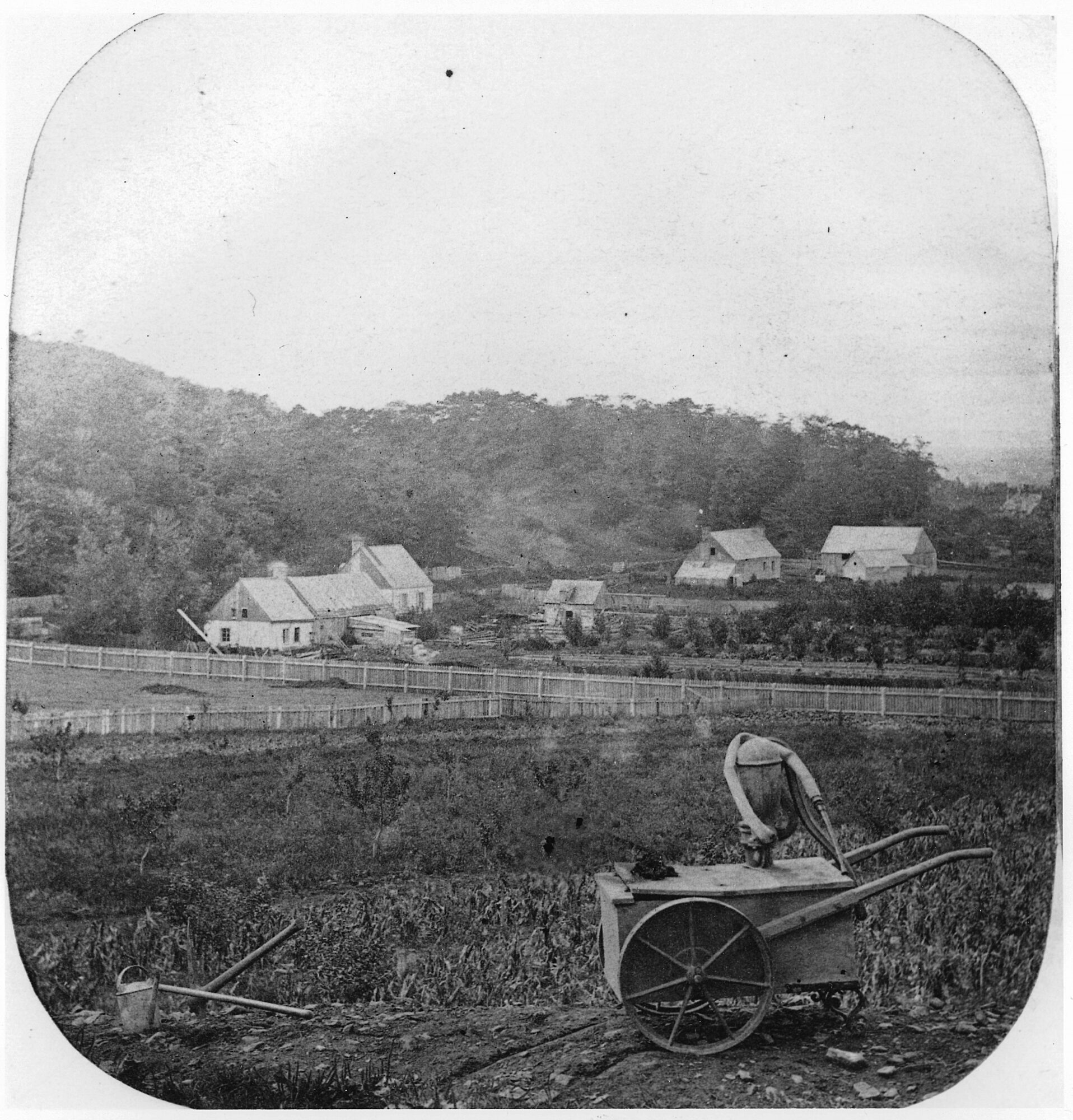
In May 1896, long before the construction of the first chapel, the Collège de Notre-Dame acquired a plot of land measuring about 7 arpents (nearly 24,000 square meters) located directly in front of its buildings on Queen Mary Road. Two reasons motivated this important decision. First, the goal was to preserve a healthy environment for the young students. The administration did not want sports clubs or drinking establishments in the immediate vicinity. Second, the land at the foot of the mountain was suitable for cultivation. The planned harvests could feed the students and even generate a small profit through sales at the Montreal market.
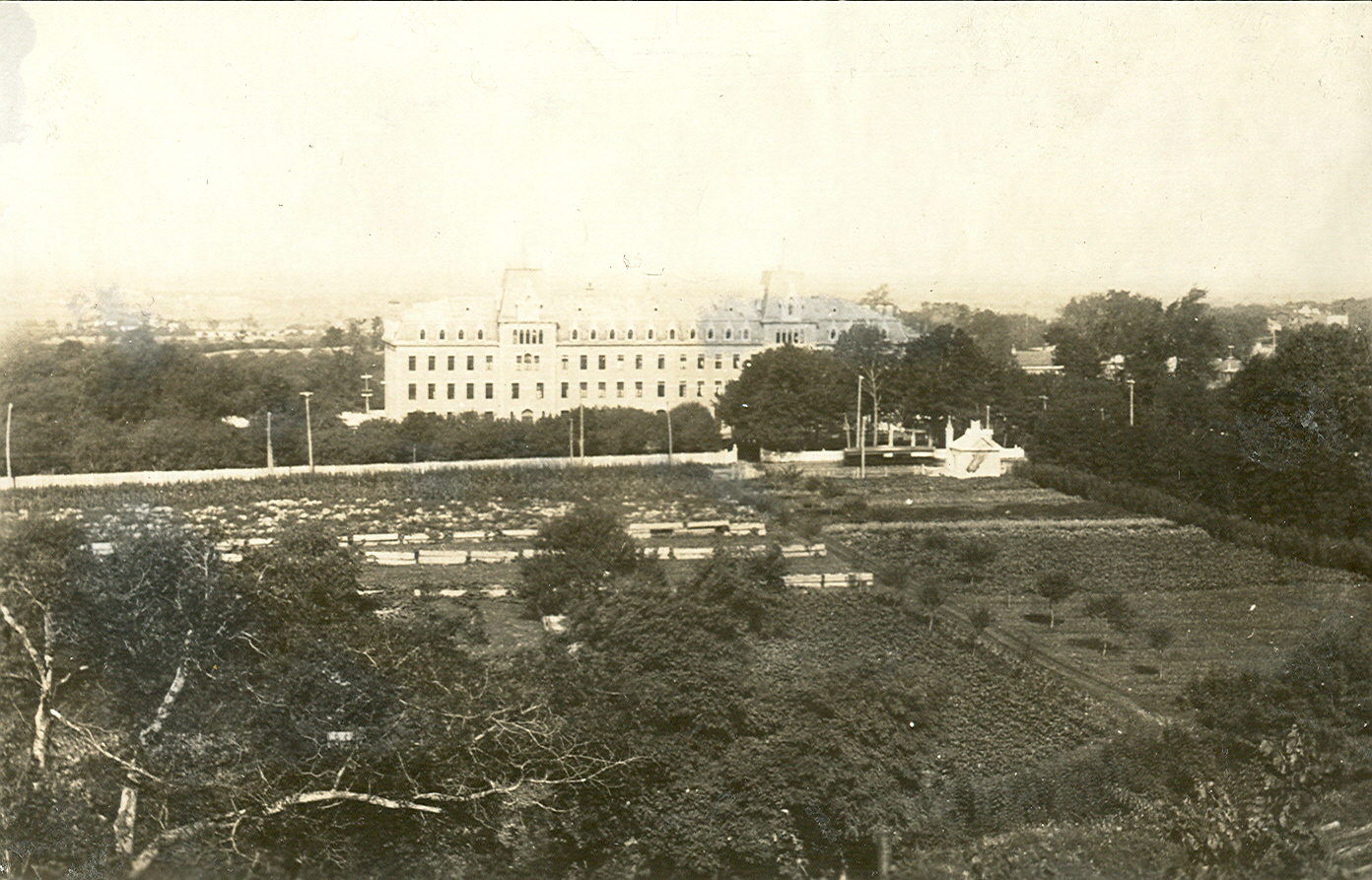
View of Collège Notre-Dame and its garden from the chapel. Date unknown [before 1910?]. Photographer unidentified. OSJ Archives, 105-02b.
Until the period when the Crypt Church was built, between 1914 and 1915, the land in front of the Oratory was indeed used as a vegetable garden for the college. In the few photographs we have from that time, we can clearly see that, aside from a narrow dirt path leading to the chapel, the grounds were largely uncultivated.
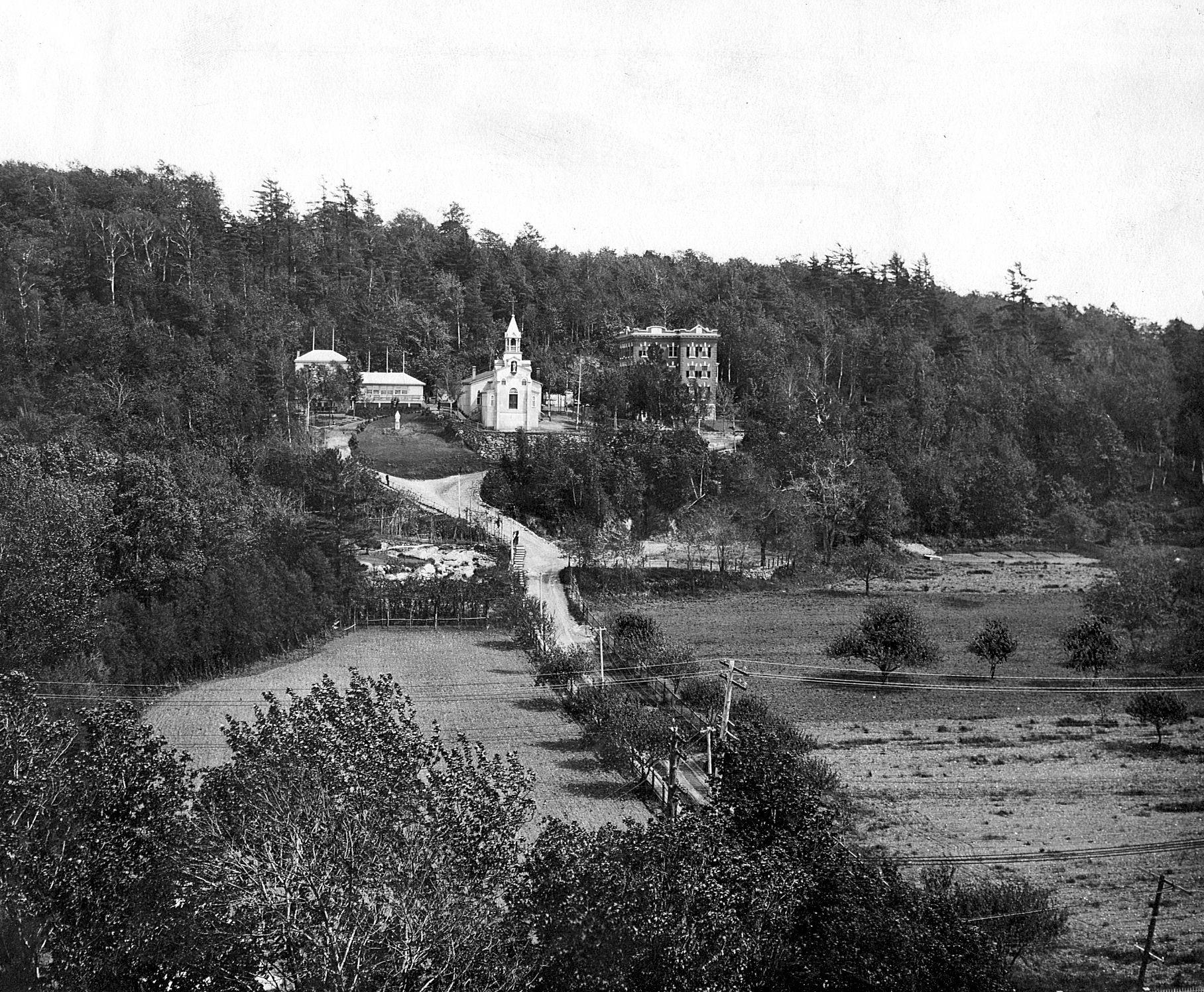
View of Saint Joseph’s Oratory a few years later, in 1912. At the foot of the chapel runs the same dirt path, and on each side are plots of land used for market gardening. Photographer unidentified. OSJ Archives, 30-01.
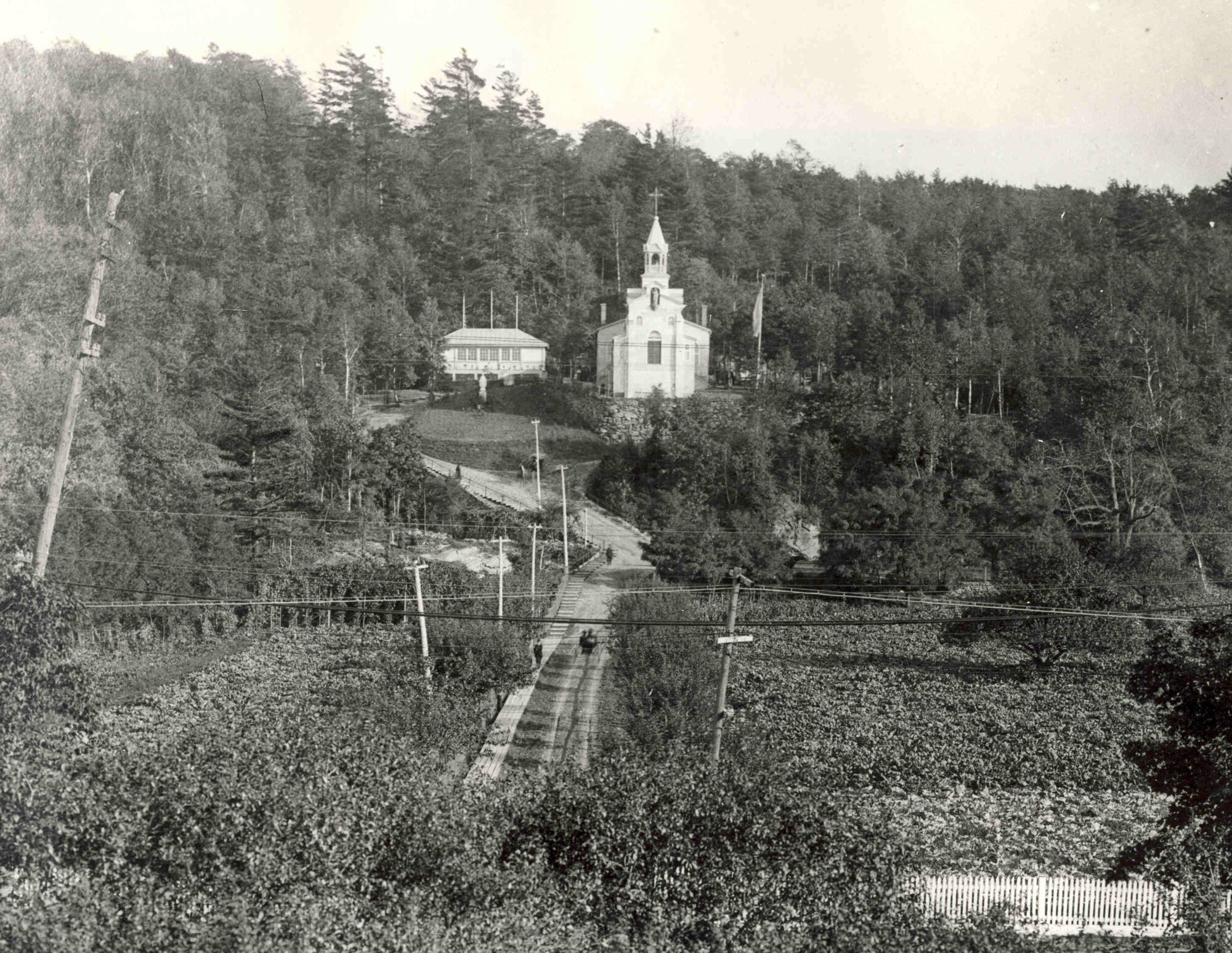
View of the Oratory in 1910. The land used for the college’s vegetable gardens is enclosed between Queen Mary Road and the small slope leading up to the chapel and the kiosk. Photographer unidentified. OSJ Archives, 30-24.
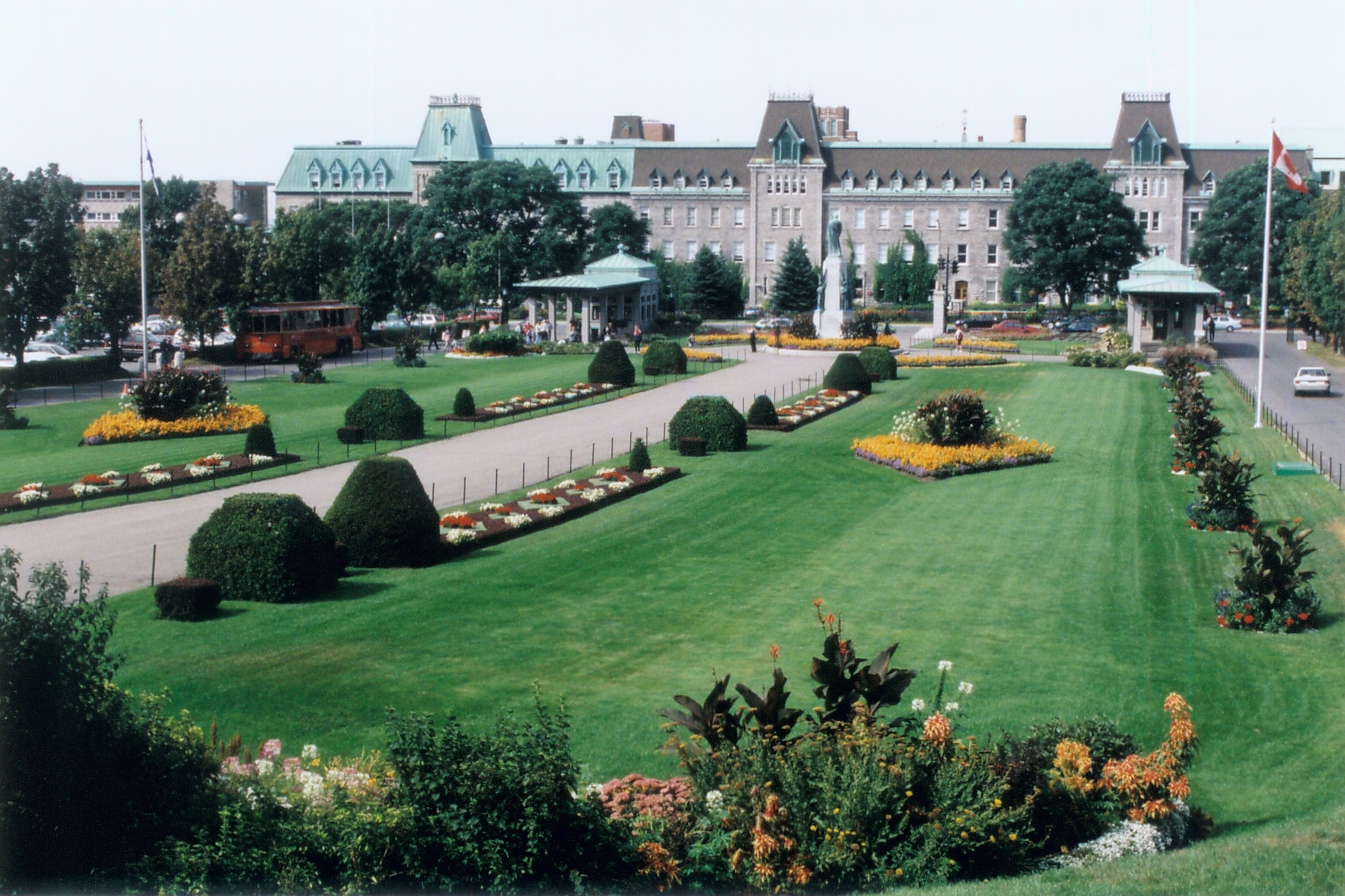
After the construction of the Crypt Church, a different layout began to take shape. With the addition of the monument to Saint Joseph in the spring of 1924, the entrance became more impressive. This area of the sanctuary was henceforth referred to as the “sacred axis.” The unobstructed view of the Crypt Church and the monastery from Queen Mary Road led to the prioritization of a grassy expanse framed by two asphalt roads for vehicles and, at the center, the famous stairway. On either side of the pedestrian path, coniferous trees were planted. To the right, a row of deciduous trees (ash trees, perhaps?) was chosen to serve as a natural boundary with what remained of the garden and, in the near future, a parking area. Finally, around the statue of Saint Joseph, mounds of earth were created to accommodate flower arrangements and clusters of shrubs. The site presented a proud appearance, as can be seen in this 1924 photograph.
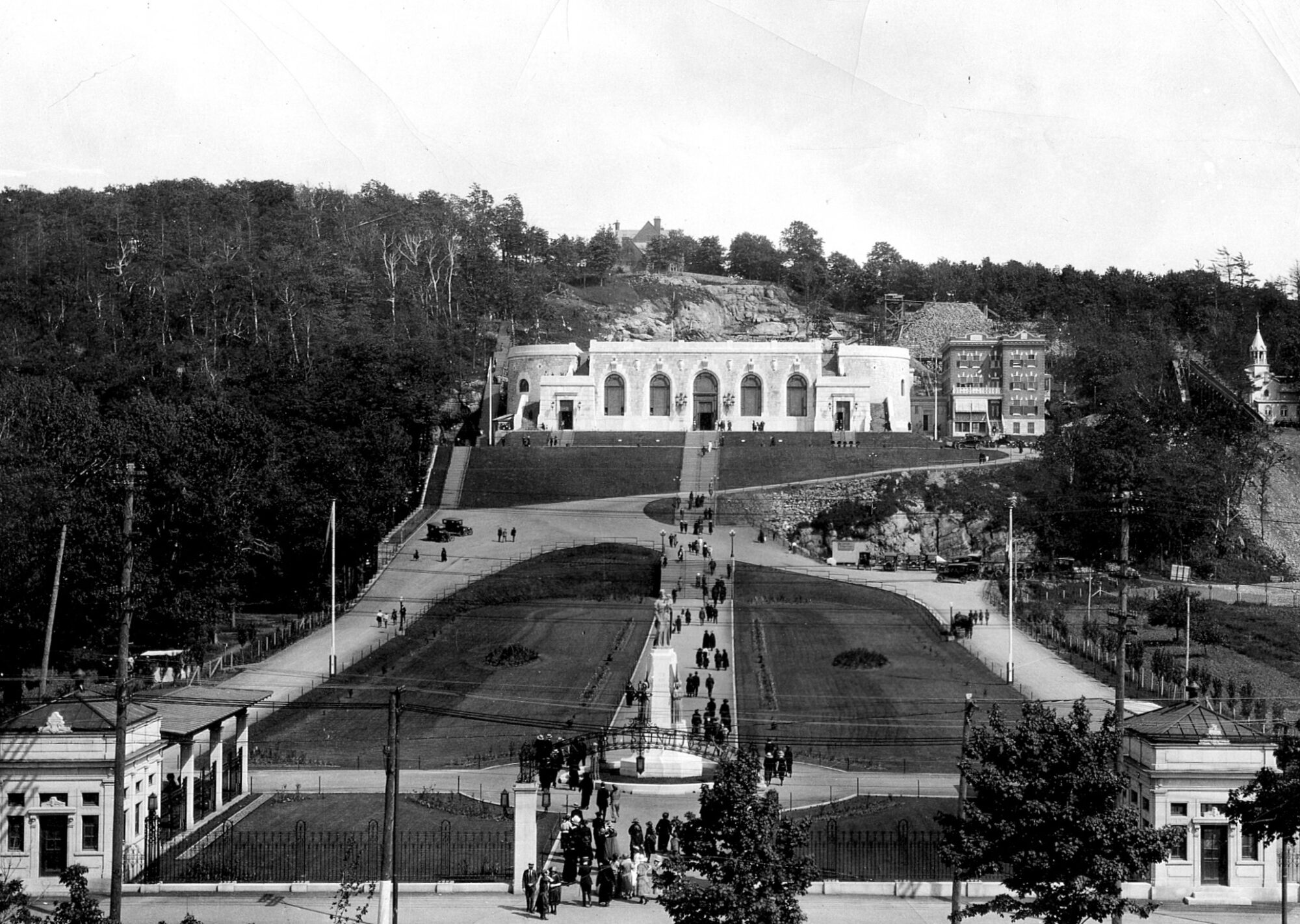
Saint Joseph’s Oratory and its sacred axis, May 1924. On the right side of the photograph, a plot of land can still be seen that appears to be used for vegetable cultivation. Photographer unknown. OSJ Archives, 43-35.
Flowers, Men, and Women
The development and upkeep of the flower beds, the sacred axis, and the grounds in general were entrusted to the outdoor maintenance team, a responsibility they still hold today. These colleagues, skilled tradespeople, gardeners, and horticulturists, both men and women, return each spring to prepare the seeds and the land.
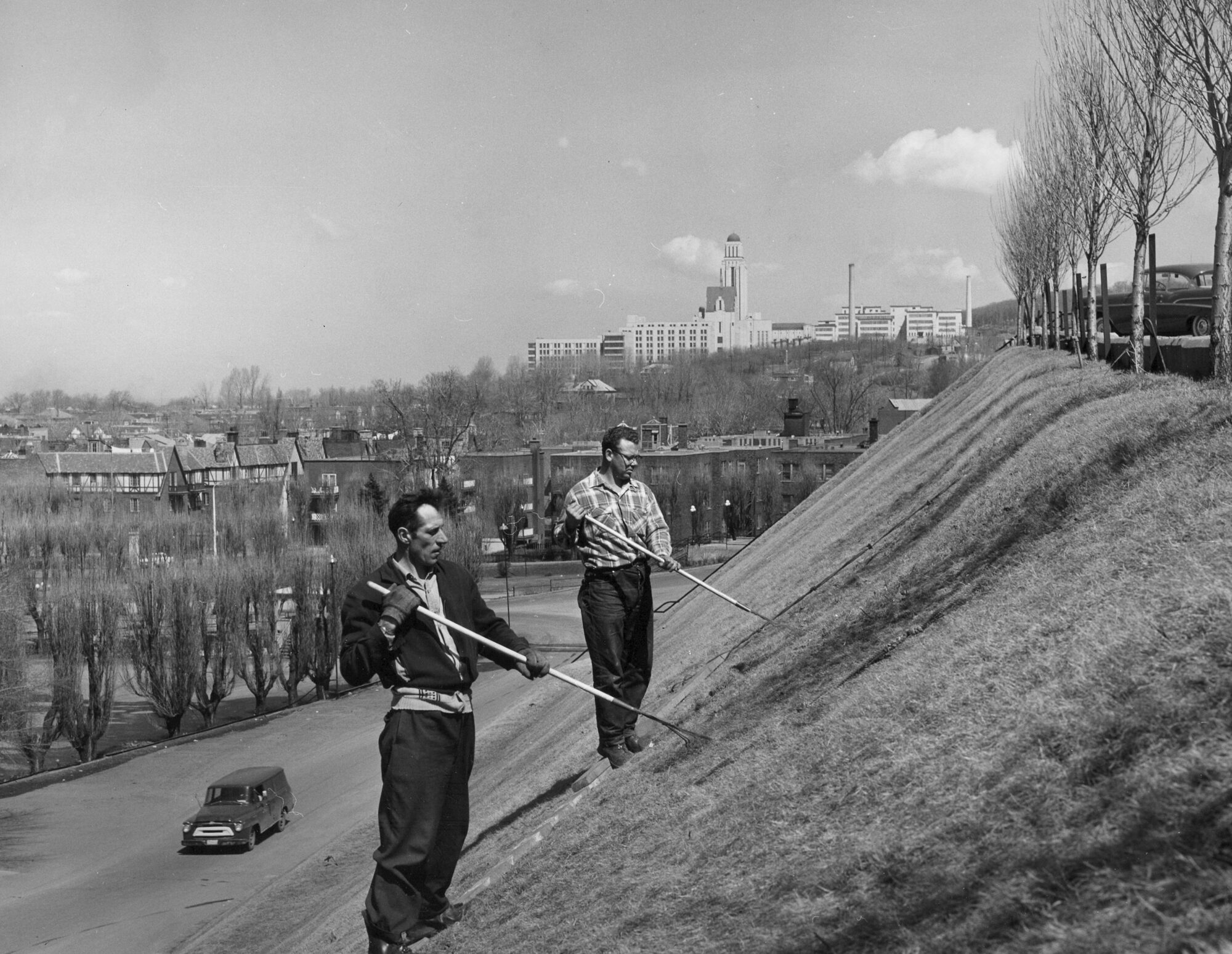
The maintenance of the grounds is devoted not only to flowers but also to the steep terraces. Date unknown. Photographer Gérard Dupuis [?]. OSJ Archives, 161-5.
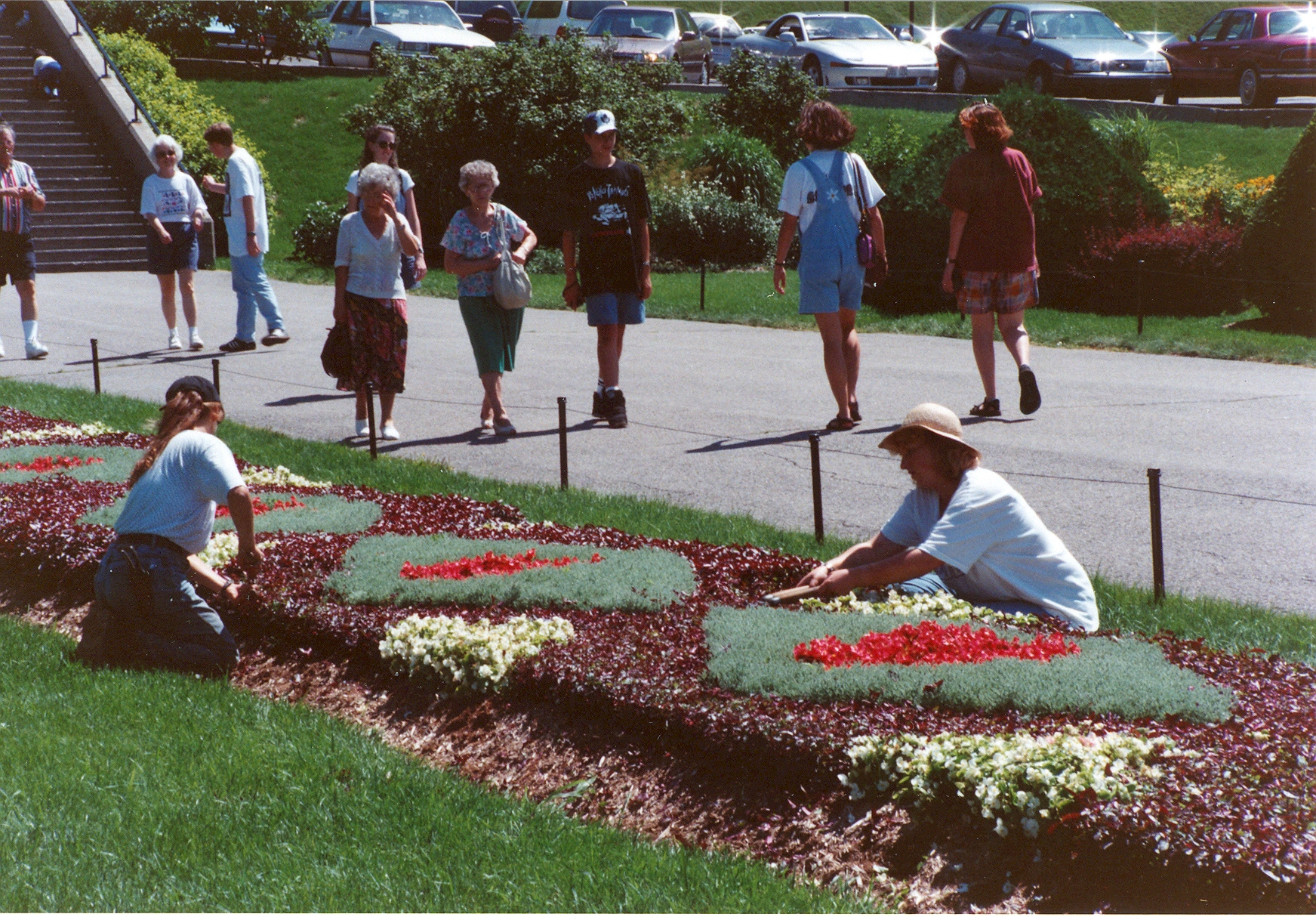
Horticulturists carefully tending the flowerbeds along the sacred axis, around 1995. Photo by Thérèse Baron. OSJ Archives.
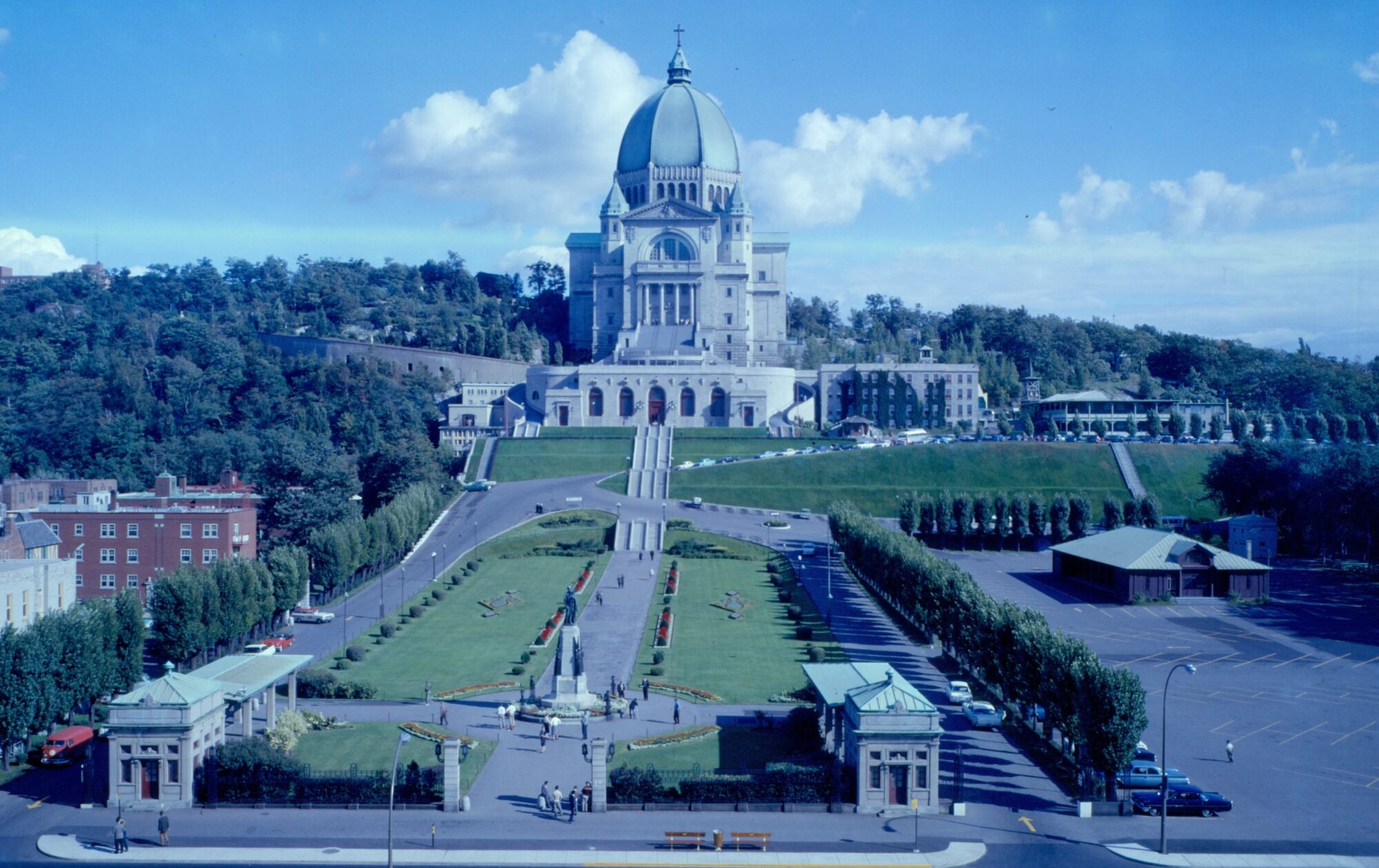
Views of the sacred axis. Date unknown. Photographer unknown. OSJ Archives.
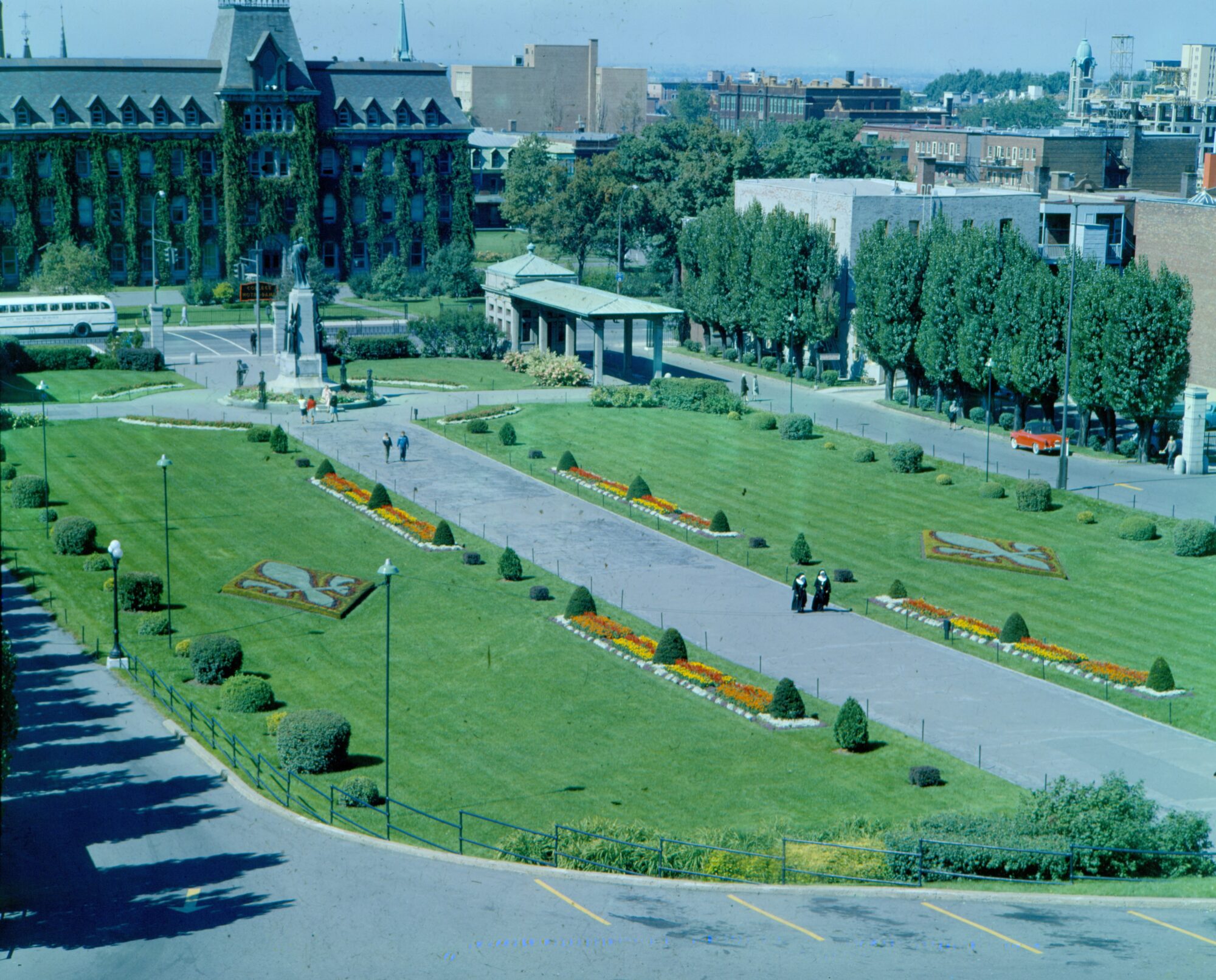
Views of the sacred axis. Date unknown. Photographer unknown. OSJ Archives.
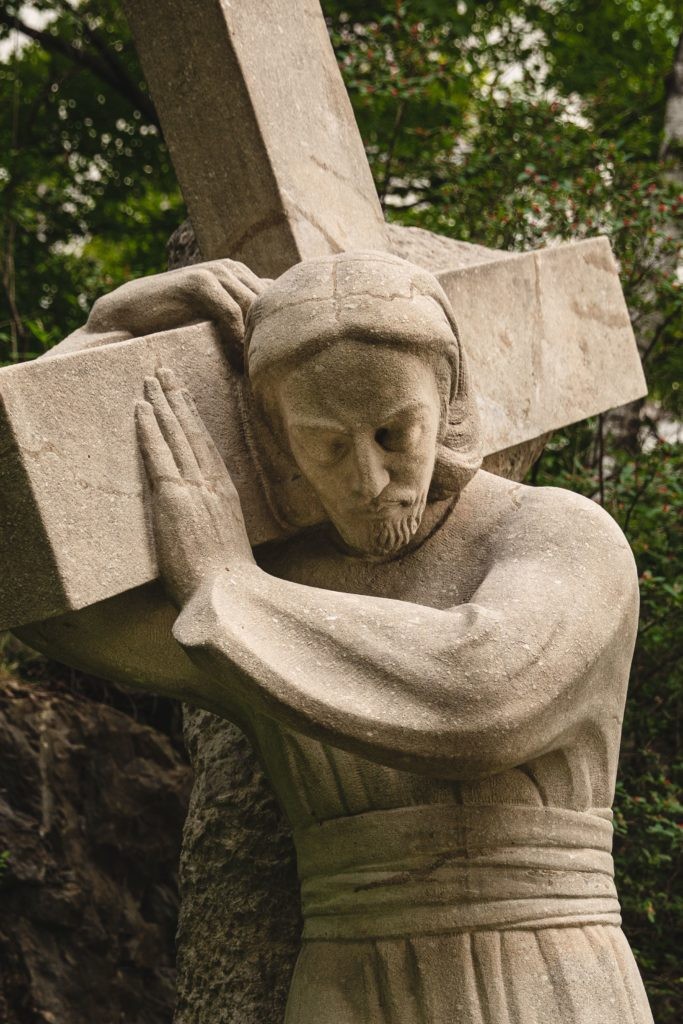
From the 1960s onward, the new gardens of the Way of the Cross required a great deal of time from the outdoor maintenance team’s schedule. However, they did not neglect the beauty of the flower beds throughout the rest of the site. Proof of this can be seen in the many awards the Oratory received in recognition of the quality of its floral arrangements. In 1974, the Oratory received its first mention during the semifinal of the 35th Beautification Competition organized by the City of Montreal’s Recreation Department and the Botanical Garden. Then, in quick succession, the Oratory was awarded second prize for its flower beds in the industrial-institutional category in 1975, first prize in the church category in 1976, and once again in 1977. These achievements are the result of the efforts of Father Paul Leduc, C.S.C., Director of Artistic Works since July 1962 (Robillard, 387).
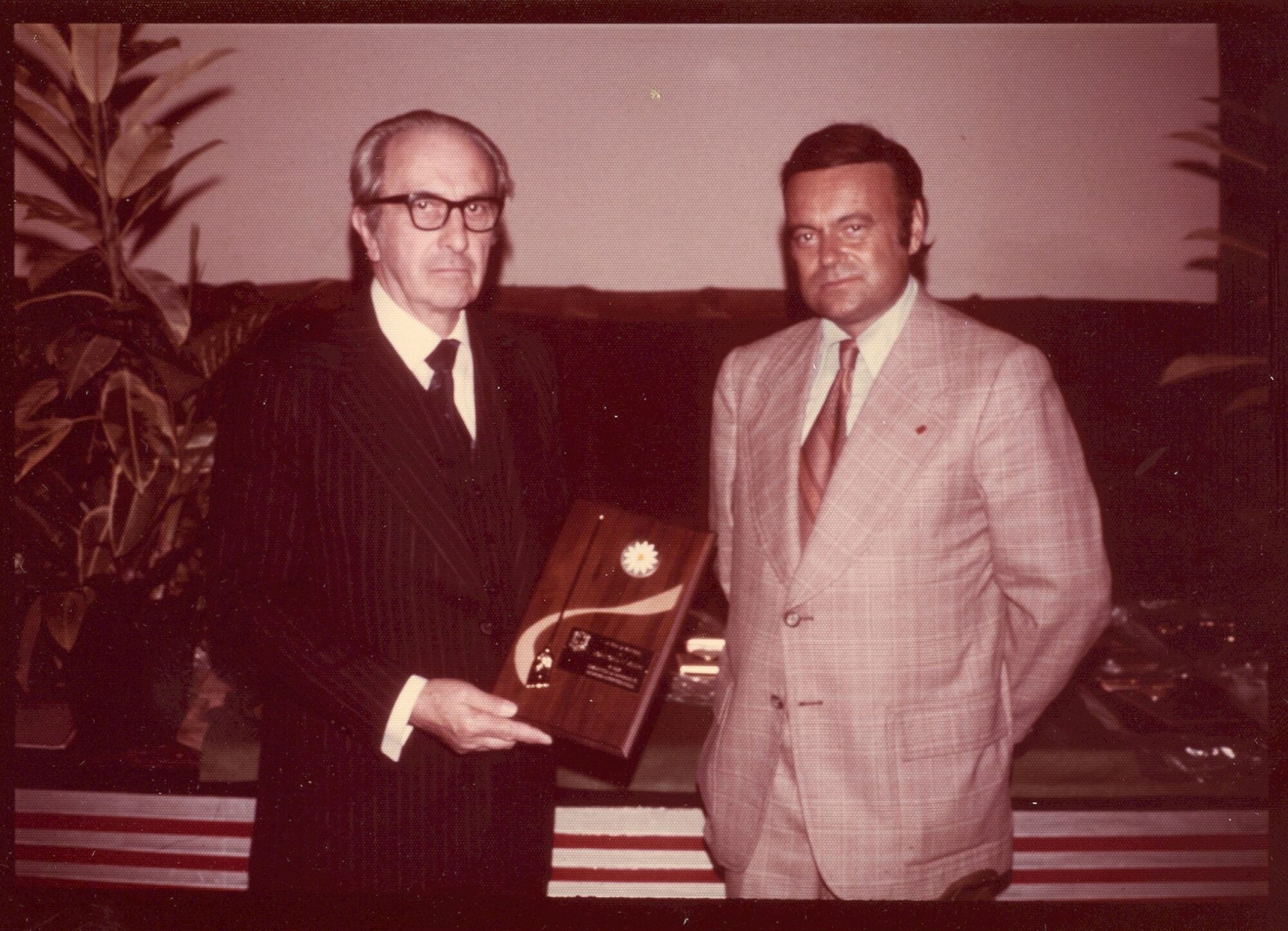
On the left, Father Paul Leduc, C.S.C., receiving the award in the Church category from the City of Montreal Recreation Department in October 1976. On the right, Mr. Marcel Parent, assistant superintendent of the Montreal Recreation Division. Photographer unidentified. OSJ Archives.