“A Love Nest for the Sick”: The Origins of the Jean XXIII Pavilion
In June 1966, a one-of-a-kind initiative took root on the grounds of Saint Joseph’s Oratory: the Jean XXIII Home.
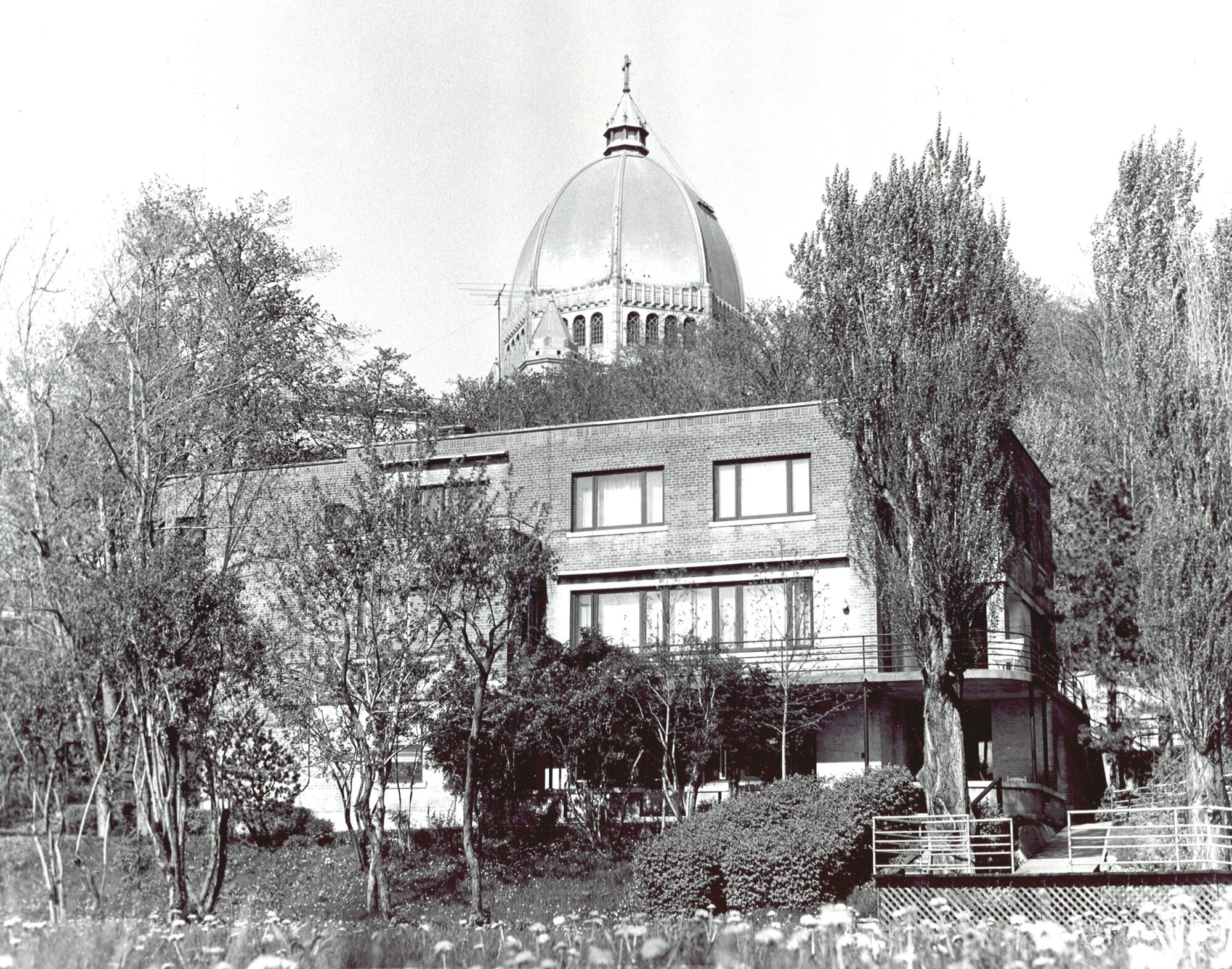
The Pavilion at its inauguration in 1966. It was also referred to as a hospitality residence or home for the sick. Photographer unidentified . OSJ Archives, Series 266.
A Patiently Built Dream
In his Notes to Serve the History of the Work of the Pilgrimage of the Sick (OPM) (1), Father Fernand Gagnon, C.S.C., reports that as early as 1956, the Oratory was considering acquiring a residence near the sanctuary in order to properly accommodate pilgrims with disabilities for stays of a few days.
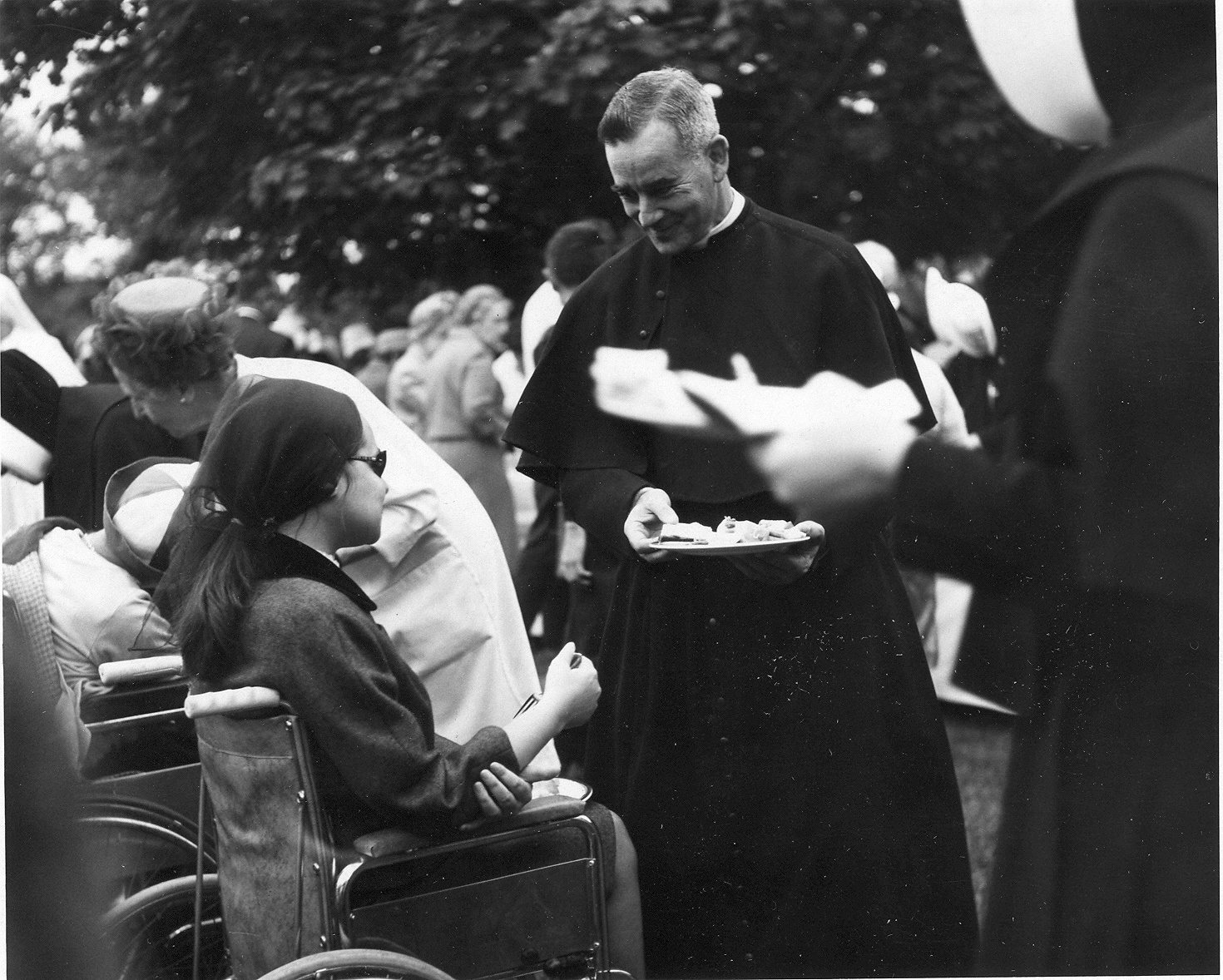
Father Fernand Gagnon, C.S.C., religious director of the OPM. He devoted a significant part of his career and ministry to caring for and welcoming the sick. June 3, 1966. Photographer unidentified. OSJ Archives, 266-25a.
The project quickly gained momentum: on March 3, 1959, the proposal shifted from purchasing a house to constructing a brand-new seven-storey building east of the Crypt Church. On March 24, architect Gilbert Moreau drew up the project plans. On April 15, the plan expanded from 40 rooms to 100, then to 200. In October, it came back down to earth with a proposal for 90 private rooms and dormitories providing a total of 165 beds. Then came the cost estimate: $800,000. Unsurprisingly, this version of the project was quickly abandoned, but the idea endured.
A Welcome for Everyone
In June 1965, the leaders of the OPM (of which Father Gagnon was a member) once again submitted their request to the Oratory’s authorities. The rector, Father Marcel Lalonde, C.S.C., suggested using a residence located on the western side of the Oratory grounds that had been purchased in 1956: Gordon House. This house, which at the time had no clearly defined purpose, could prove useful in meeting the OPM’s needs.
Father Gagnon immediately undertook the necessary renovations to ensure that the sick could access the rooms according to their abilities, but the greatest challenge was finding someone capable of managing a specialized hospitality service. The position required a day-and-night presence to ensure the comfort of six people with disabilities for stays ranging from five to seven days. Following the rector’s advice, Father Gagnon approached the Sisters of Providence congregation. They agreed to take on the challenge and assigned two full-time sisters beginning in January 1966 (2). Things progressed quickly and smoothly, so much so that a first Christmas celebration was held at the Pavilion on December 26, 1965, with 16 people with disabilities in attendance.
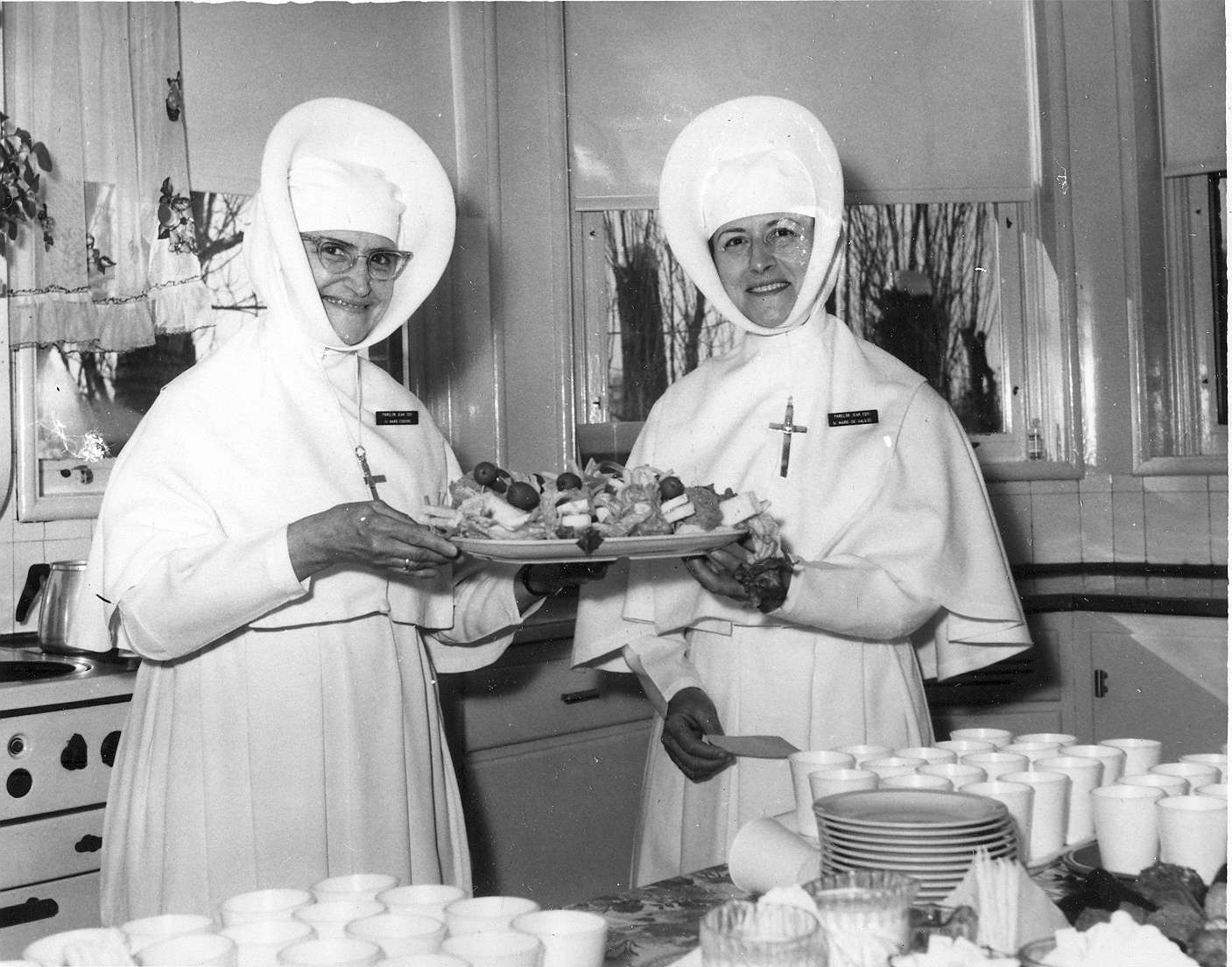
The Sisters of Providence assumed responsibility for the administration of the Pavilion and the reception of sick pilgrims beginning in 1966. From left to right: Sister Marie-Isidore, Assistant Director, and Sister Marie de Galilée, Director of the Pavilion. Photographer unidentified . OSJ Archives, 266-12b.
The official inauguration of the Jean XXIII Pavilion was celebrated by Archbishop Paul Grégoire on June 3, 1966.
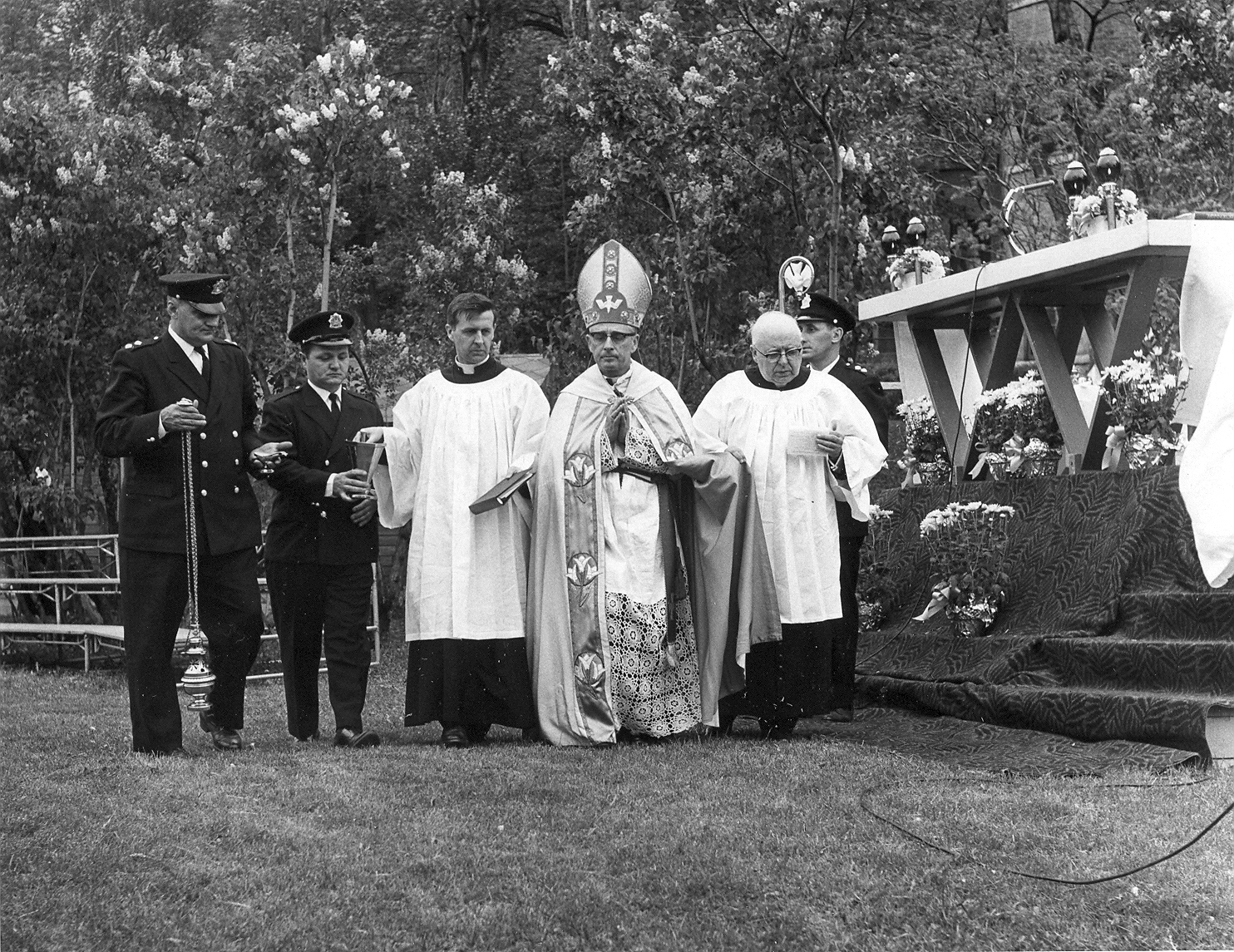
Inauguration and blessing ceremony of the Jean XXIII Pavilion. Auxiliary Bishop Paul Grégoire presides over the celebration, accompanied by Rector Father Marcel Lalonde (left) and Father Émile Deguire (right), along with volunteers. June 3, 1966. Photographer unidentified . OSJ Archives, 266-27a.
Remarkable Collaborations
The Oratory charged the OPM rent to cover the building’s maintenance costs. In order to increase revenue, Father Gagnon renovated and opened adapted rooms on the second floor. The cost of a stay was set at $2.50 per person, per night, in a dormitory, while a private room rented for $5. “It was little, but most could not afford to give more,” he wrote.
To help support the Pavilion’s finances, the OPM organized an annual Christmas cake sale. Donors were also approached through a stamp-sale campaign promoted in The Friend of Brother André, which raised more than $30,000 (3). The Sisters of Providence also provided “all the necessary materials to make the Pavilion beautiful and welcoming: curtains and household linens poured into the Pavilion thanks to them.”
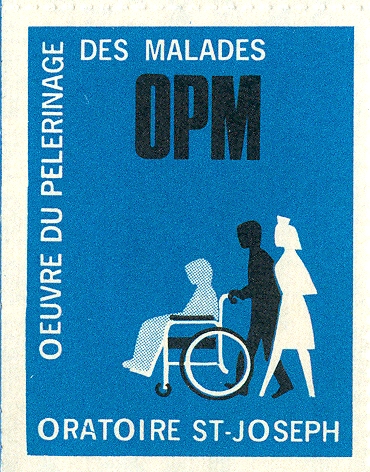
A commemorative stamp specimen offered to donors and subscribers of the Brother André’s Friend (L’Ami du frère André) bulletin to help fund the construction of the Jean XXIII Pavilion. OSJ Archives, P006.
Reflecting on this dream that had become a reality, Father Gagnon would later write that “this house became a true love nest for the sick.”
(1) All notes and quotations are taken from the OSJ Archives, P006, History of the Jean XXIII Pavilion.
(2) Sister Marie de Galilée, S.P., director of the Pavilion, accompanied by Sister Marie-Isidore, S.P., nurse.
(3) Handwritten note by Father Fernand Gagnon, C.S.C., published in The Friend of Brother André bulletin in August 1965. OSJ Archives, P006, History of the Jean XXIII Pavilion.