Welcoming the Crowds to the Mountain
The attraction of the Oratory for pilgrims and curious visitors dates back to its very beginnings. It quickly became necessary to prepare for welcoming the growing crowds.
A Path, a Lookout… a Chapel
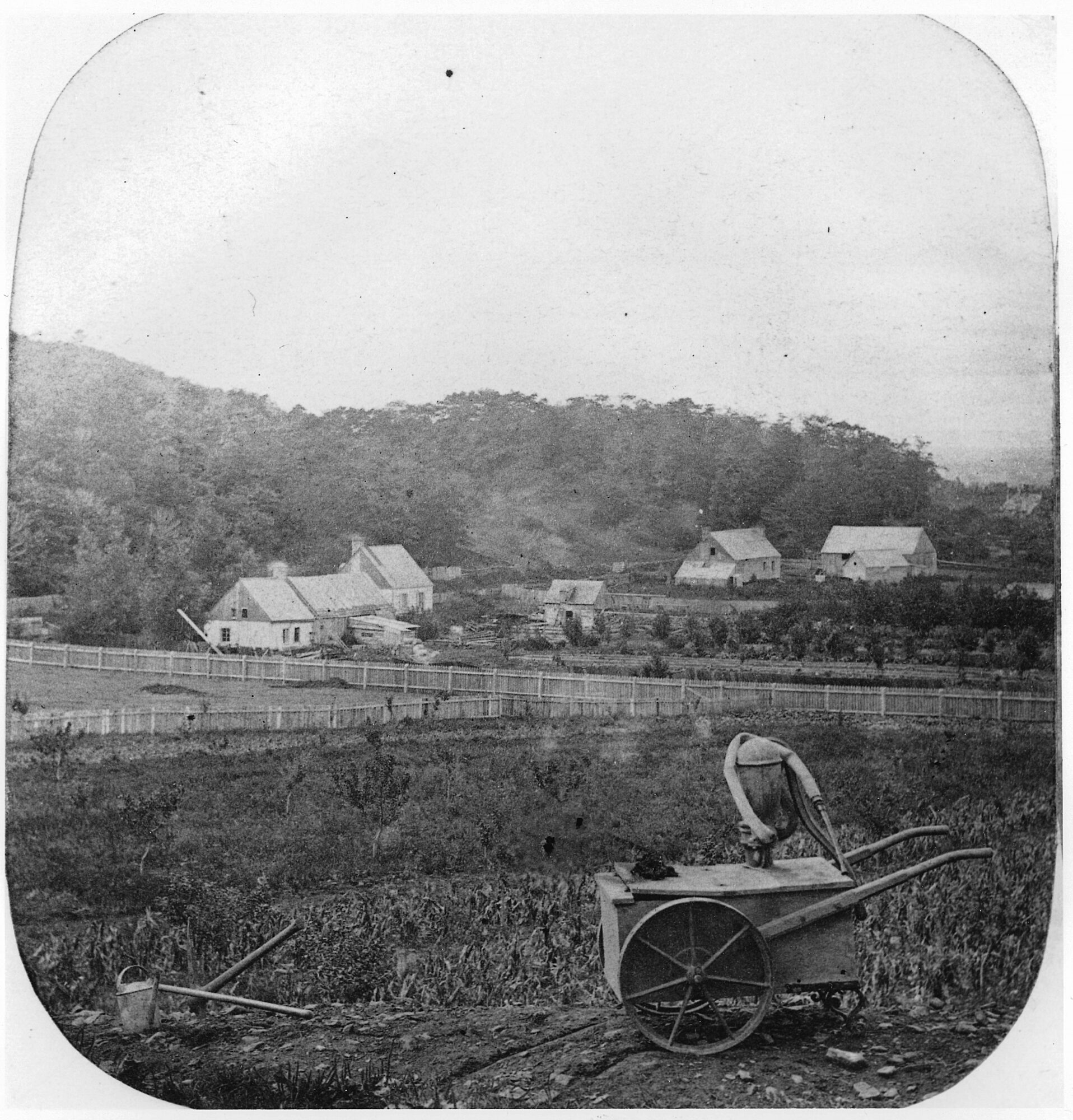
In 1896, Notre-Dame College acquired a vast tract of land on the mountainside that it had long hoped to obtain. Located directly in front of the college, it was a magnificent green space where students and their teachers enjoyed walking along a path nicknamed “Saint Joseph Boulevard.”
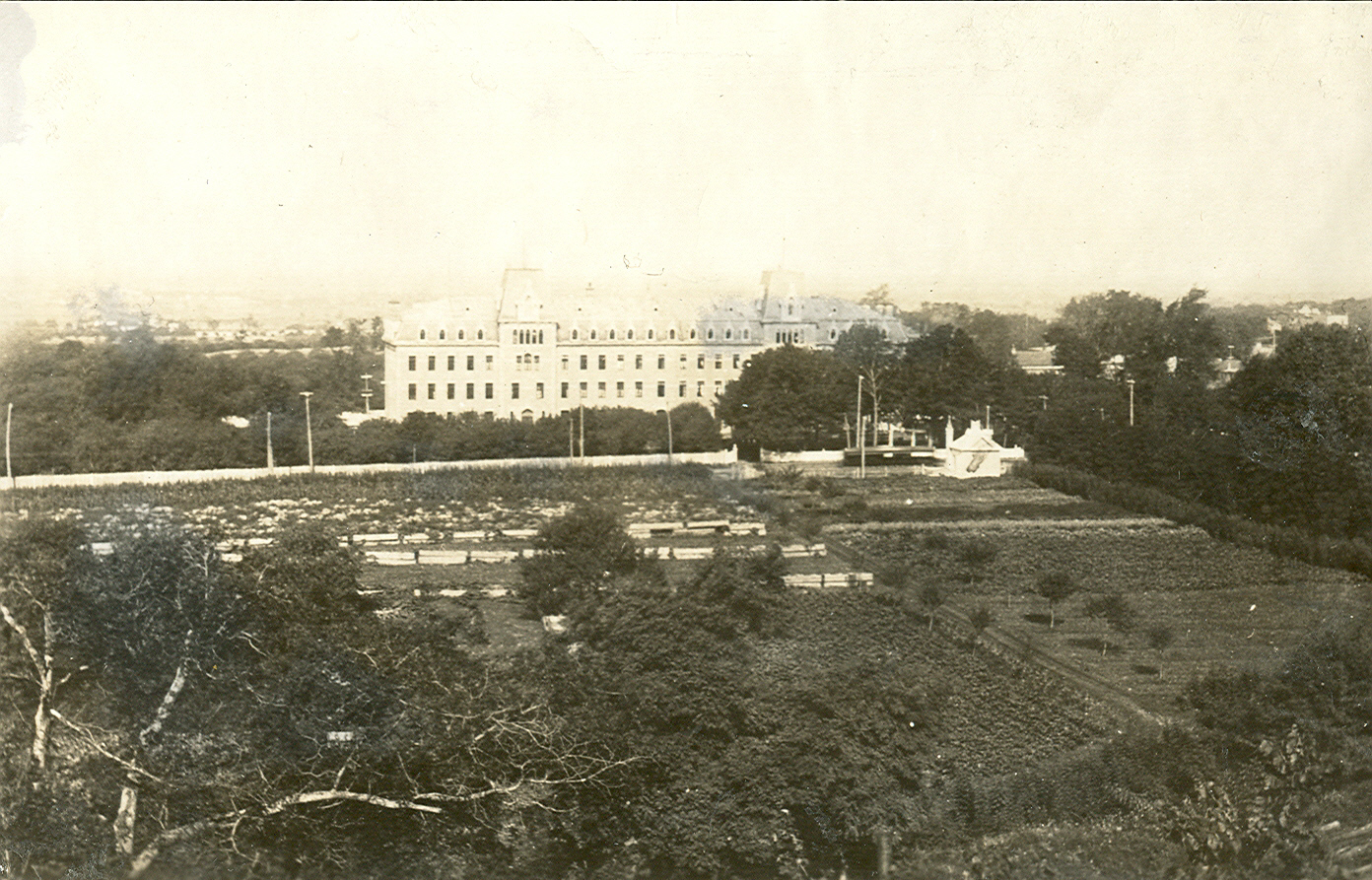
Notre-Dame College as seen from the mountainside, c. 1904. Photographer unknown. Saint Joseph’s Oratory Archives, 105-2b.
Everyone knew that Brother André dreamed of building a chapel dedicated to Saint Joseph on the site, but the college authorities did not approve. Then, Brother André and the college superior, Father Benjamin Lecavalier, happened to be patients in the infirmary at the same time. One can only imagine that Saint Joseph occupied a good part of their conversations. Father Lecavalier was eventually persuaded and authorized the construction of a chapel, but at Brother André’s expense. He allowed Brother André to keep the money earned from cutting the students’ hair and to enlist the services of Brother Abundius, the college carpenter, to oversee the construction. On October 19, 1904, the chapel was officially inaugurated. [1]
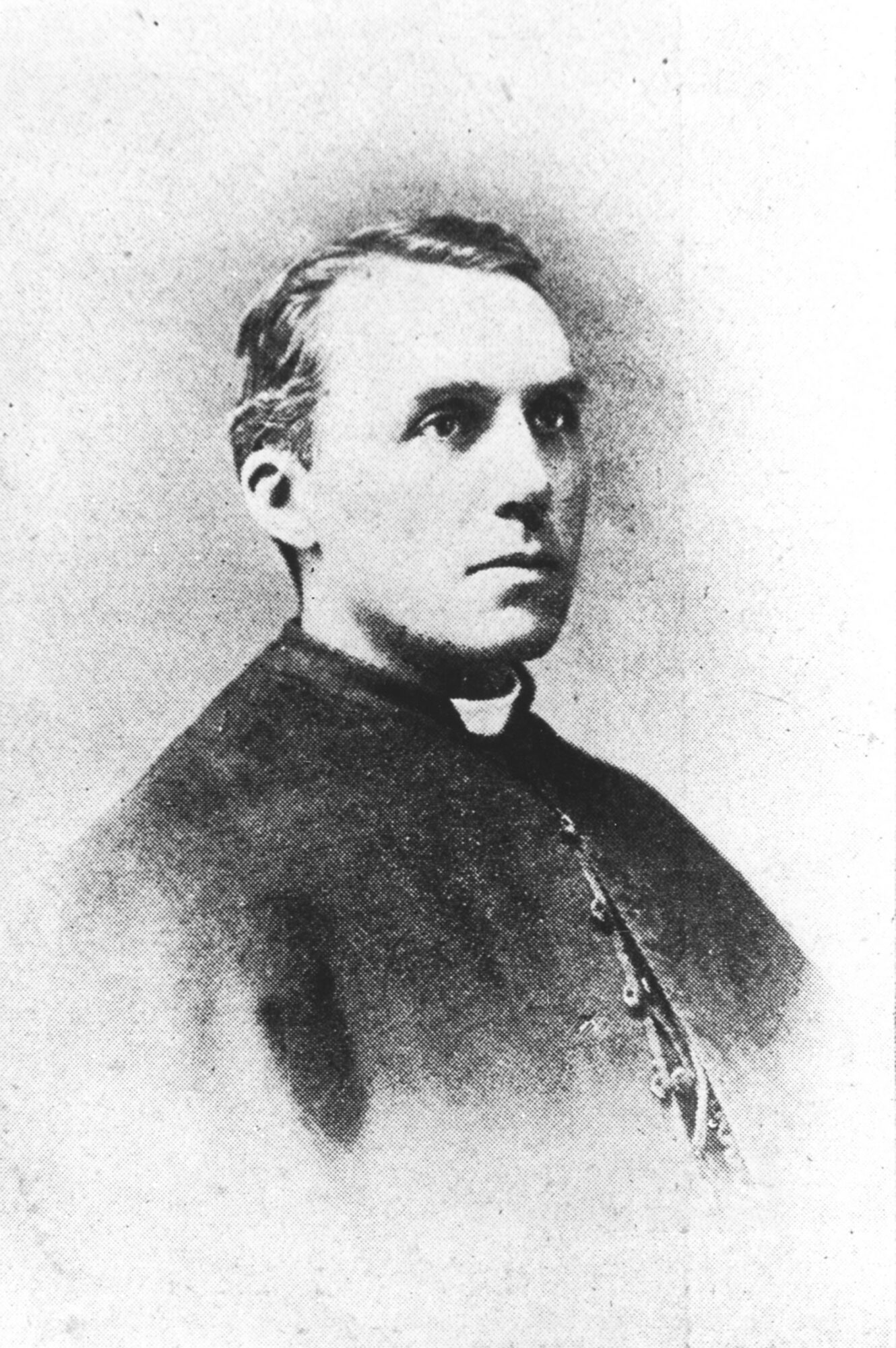
Portrait of Father Benjamin Lecavalier, C.S.C., before 1899 [?]. Photographer unknown. Saint Joseph’s Oratory Archives.
An Enterprising Secretary
Pilgrims arrived in large numbers, and organized pilgrimages soon began to take shape. Brother André and his collaborators were already thinking about expanding the chapel. In the fall of 1908, a temporary extension was built to shelter pilgrims from the elements. By November of that same year, much of this addition had been converted and incorporated into the chapel’s nave.
Behind this transformation was the Saint Joseph’s Oratory Committee, an association of laypeople whose purpose was to support the sanctuary’s physical development. [2] Among its members was Mr. J. Aimé Renaud of Montreal, who served as secretary. Very little is known about him, except that he was the nephew of Mr. Jules-Aimé Maucotel, a close friend of Brother André.
In February 1909, Mr. Renaud presented the committee with a plan to construct a building east of the chapel that would house a restaurant, a religious goods shop, and a waiting and rest room for pilgrims. Mr. Renaud undertook to cover all construction costs, including materials and labour, in exchange for the exclusive right to sell food and refreshments until his expenses had been reimbursed. [3] The building was completed in less than two months, although the restaurant was never included. A small room was added between the gift shop and the waiting room to serve as Brother André’s living quarters.
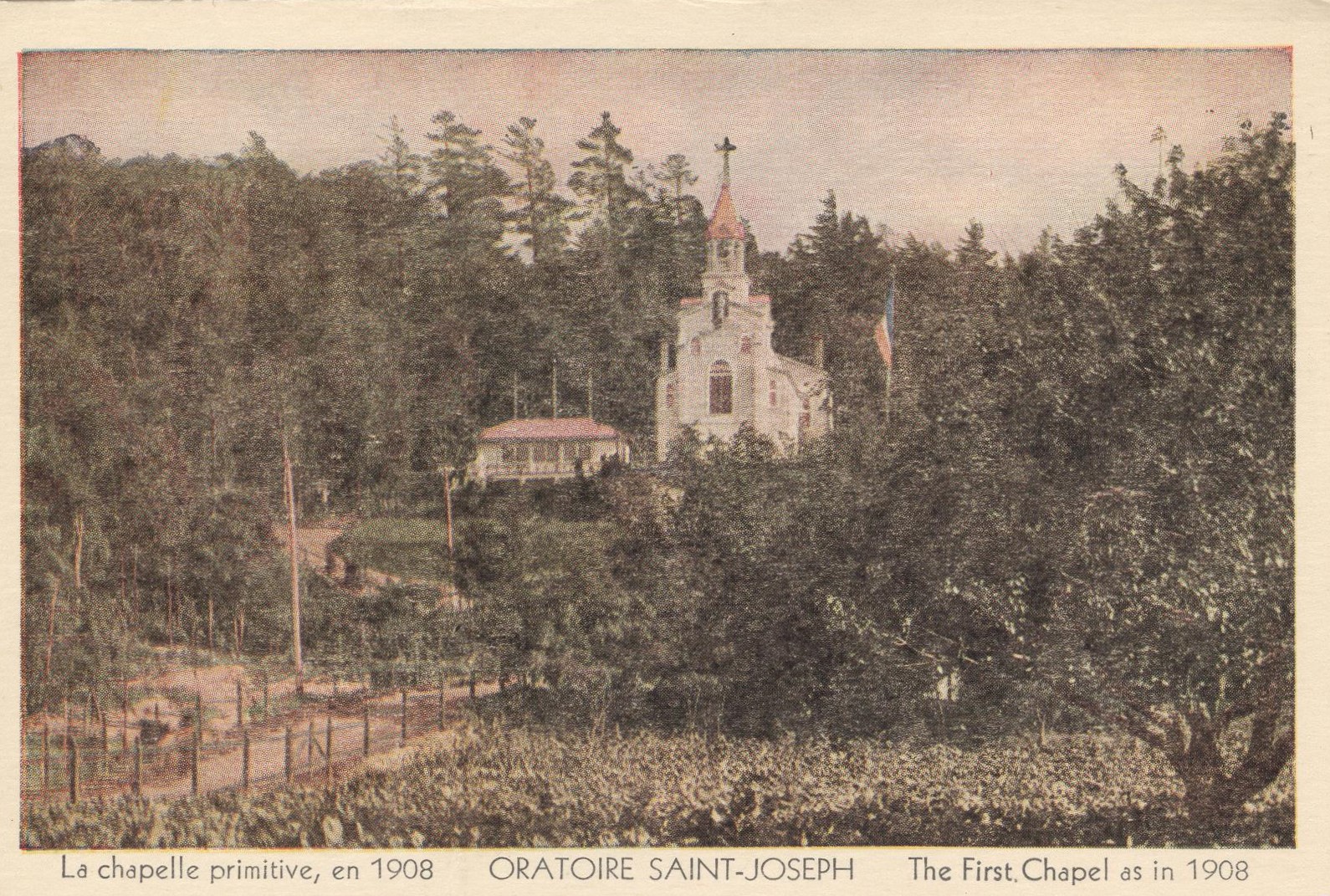
This postcard shows the chapel and Mr. Renaud’s kiosk. Photographer unknown. Saint Joseph’s Oratory Archives, CP29-1.
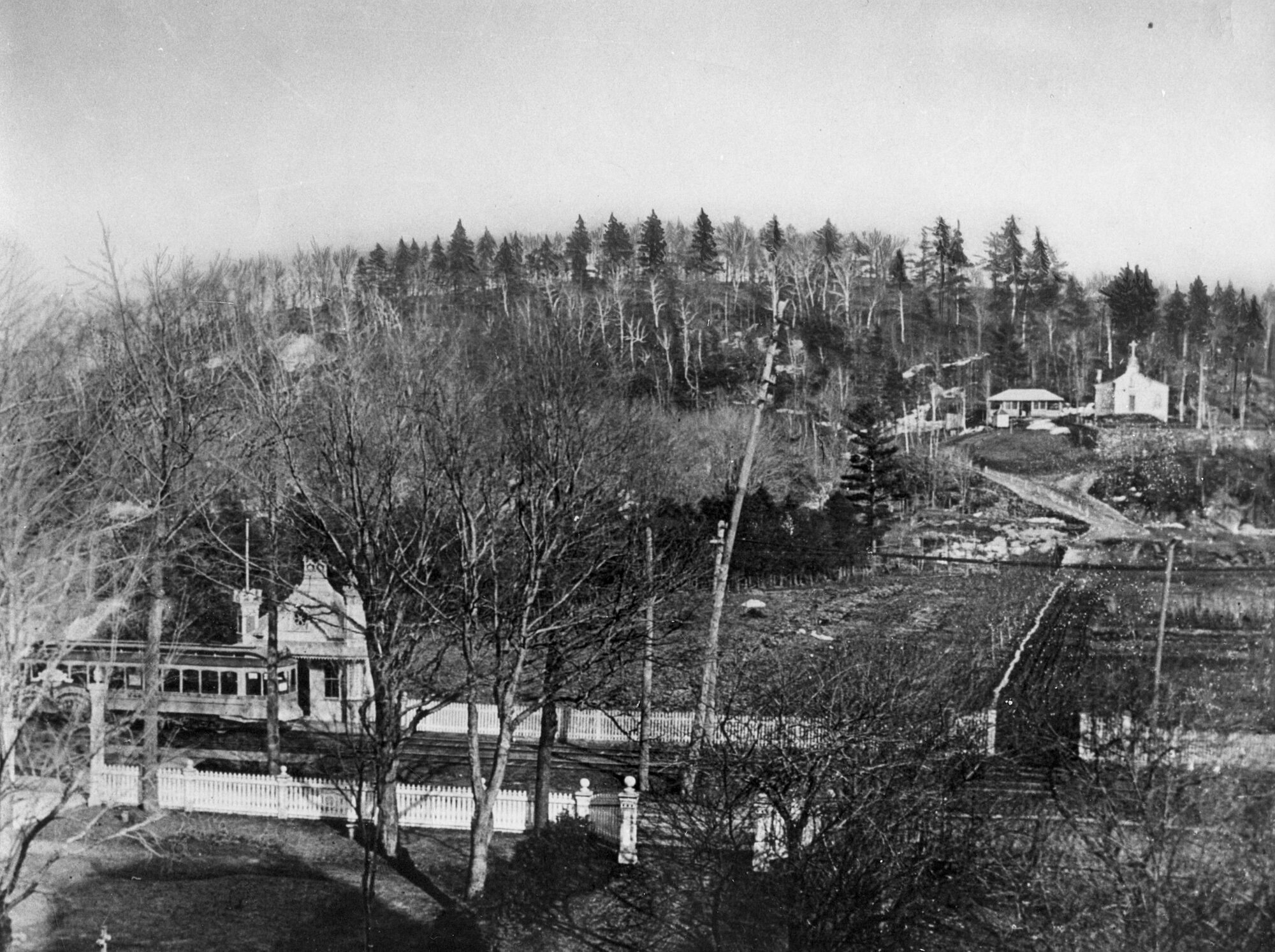
The Oratory grounds in 1909. In the foreground, a streetcar passes in front of the station. In the background, on the right side of the photograph, the kiosk and the enlarged chapel can be seen. Photographer unknown. Saint Joseph’s Oratory Archives, 29-1b.
Mr. Renaud had a glass display case installed to showcase devotional objects “that pilgrims wished to acquire as mementos of their visit.” [4] Encouraged by this success, he proposed the installation of a statue of the Virgin Mary at the centre of a landscaped lawn. This “Madonna of the Lawn” was received and blessed on August 21, 1909, by an important member of the Congregation of Holy Cross: Bishop Linneborn, a missionary bishop in Bengal. [5] Around the same time, J. Aimé Renaud stepped down from the committee for health reasons.
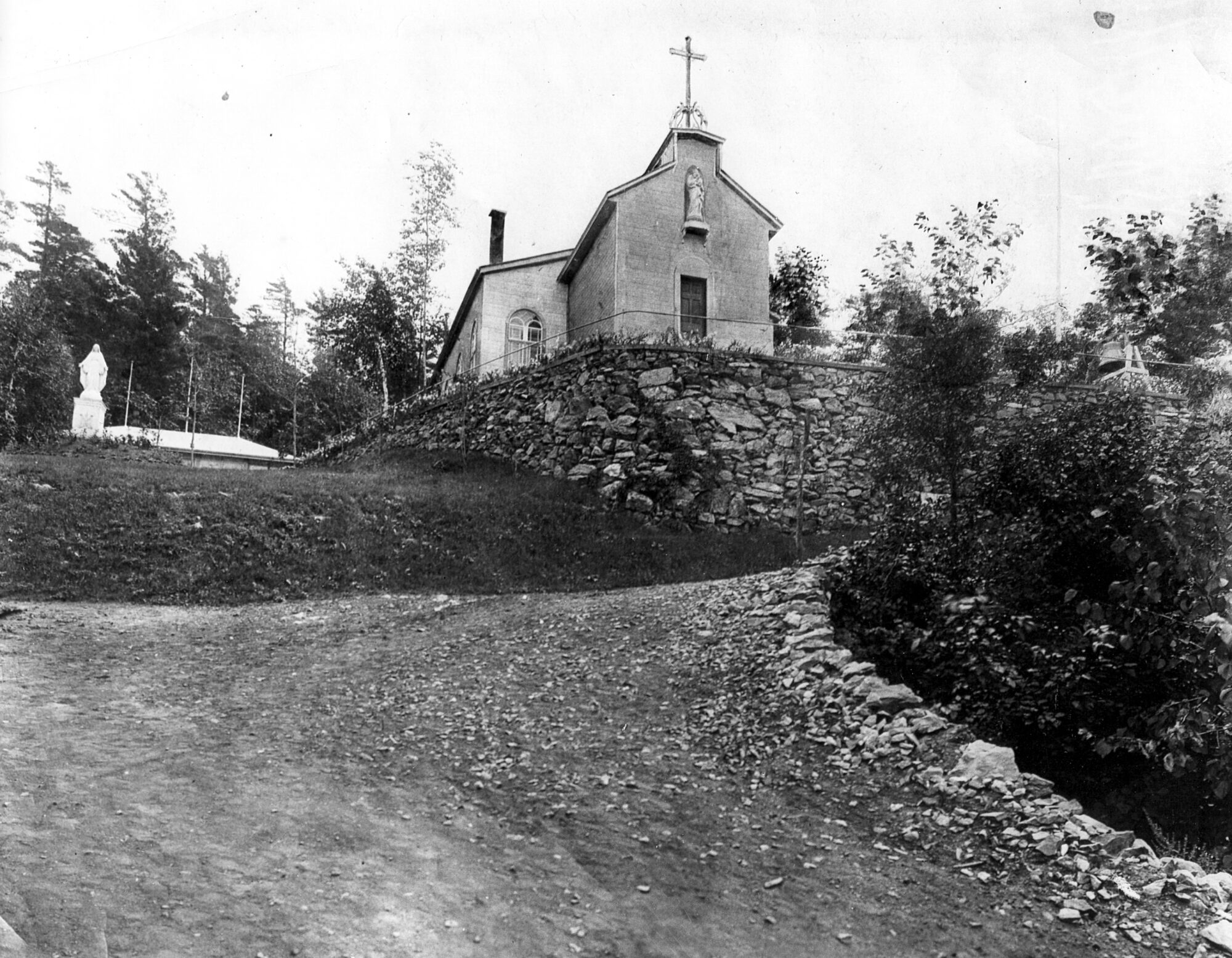
The chapel and the statue of the Blessed Virgin, 1909. The roof of Mr. Renaud’s kiosk can be seen, and at the far right, a bell mounted on a frame. Photographer unknown. Saint Joseph’s Oratory Archives, 29-4.
A Pavilion for Pilgrims
When Brother André was appointed caretaker of the Oratory in July 1909, responsibility for the kiosk was entrusted to Mr. Joseph Savage. Mr. Savage and his sons were also permitted to stay overnight at the sanctuary to provide security.
In August 1911, the restaurant envisioned in Mr. Renaud’s original plan was finally built. Quite substantial in appearance with its three storeys, the square building measured 25 by 25 feet and was attached to the kiosk. The kitchens were located on the garden level, while the dining room occupied the first floor. Four bedrooms were fitted out on the second floor for Mr. Savage and his family, who moved in on October 5. The entire family became closely involved in the life of the Oratory.
In 1958, one of the Savage sons recalled what life was like at the Oratory during those early years:
“We first got to know Brother André because my father worked for him at the little chapel, and later at the religious goods shop. That was quite a while ago, I was still very young. Brother André would come and chat with people gathered around the counter. We had permission to operate a restaurant. My mother was the one who ran it.” [6]
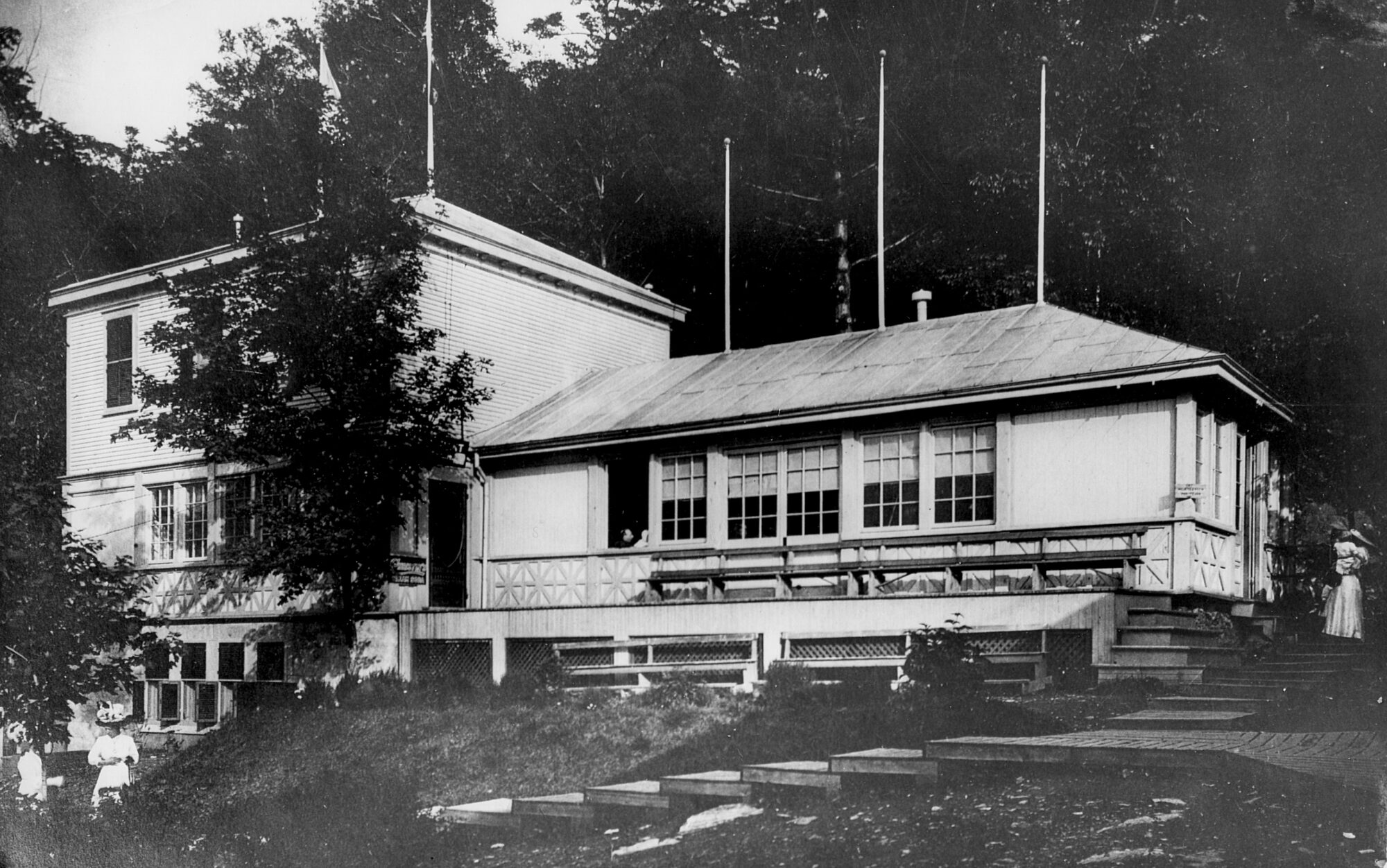
The restaurant and the devotional goods kiosk. The latter housed the caretaker’s room and the pilgrims’ waiting room. c. 1912. Photographer unknown. Saint Joseph’s Oratory Archives, 171-2.
The Oratory’s first restaurant remained in operation for only four years. Around 1915, it was demolished to make way for the Crypt Church.
Footnotes:
[1] Denise Robillard, The Wonders of the Oratory, 2005, pp. 37–38.
[2] Ibid., p. 43.
[3] Ibid., p. 47.
[4] Annals of Saint Joseph, November 1912, p. 328.
[5] This region now corresponds to present-day eastern Bangladesh and the state of West Bengal, India.
[6] Testimony of Joseph Savage Jr. to Canon Étienne Catta, Brother André 1845–1937, 1965, p. 279.